Preparing for the CS Executive examination requires students to manage multiple subjects, complete the applicable syllabus and retain earlier topics while moving forward. A monthly planner makes this workload easier by turning broad goals into weekly and daily tasks.
A useful planner should be realistic and flexible. It must include concept learning, revision, question practice and assessment rather than allocating every day to new chapters. This guide explains how to create and adjust a monthly plan.
Check your examination attempt and syllabus
Confirm the subjects, modules, syllabus and examination schedule applicable to your attempt through official ICSI information. Check relevant amendments and instructions before assigning chapters to the calendar. A planner based on an outdated syllabus can lead to wasted effort.
Note the examination dates and calculate the complete weeks available. Keep a buffer for unexpected commitments and use the remaining time to plan coverage, revision and tests. If preparing for selected modules, reflect that choice in the plan.
Assess your current preparation level
List chapters by subject and classify each as not started, partly completed, completed, revised or tested. This provides a realistic starting point. A chapter should be complete only when you understand its main concepts and have attempted relevant questions.
Identify difficult chapters, topics requiring repeated practice and areas where your knowledge is stable. Use test performance or self-assessment. Give extra time to weak areas without ignoring the rest of the syllabus.
Set one main objective for the month
Choose a measurable objective such as completing a defined portion of the syllabus, revising selected subjects or improving performance through cumulative tests. Avoid setting several large objectives that compete for the same hours.
Break the objective into weekly outcomes. A week may focus on completing chapters, revising earlier topics and attempting a short test. Keep the monthly goal visible in a tracker and review progress weekly.
| Preparation area | Recommended focus |
|---|---|
| Understanding | Build clarity on concepts and applicable provisions. |
| Application | Practise case studies and scenario-based questions. |
| Revision | Revisit key topics at planned intervals. |
| Presentation | Structure answers around the exact requirement. |
| Assessment | Attempt timed tests and analyse mistakes. |
Divide the month into weekly cycles
Week one can focus on starting planned chapters and revising earlier work. Week two can continue coverage while adding chapter questions. Week three can include cumulative revision and application-based practice. Week four can include a review test and progress assessment.
This is a flexible framework. If the syllabus is complete, devote more time to revision and tests. If you are at an early stage, allocate more time to concept learning while retaining short review sessions.
Create a balanced daily timetable
Assign demanding subjects to the hours when you are most alert. Use separate blocks for learning, revision and question practice. Avoid planning every minute; breaks and flexibility make the routine easier to maintain.
Give each session a defined outcome. Instead of writing 'study a subject', specify the chapter, questions to solve and revision task. Clear tasks reduce decision-making and help you recognise when a session is complete.
Rotate subjects to maintain continuity
Plan a rotation that gives each paper regular attention. Studying one subject for too many consecutive days may leave others untouched. Repeated contact maintains familiarity and helps connect related concepts.
Rotation does not mean dividing time equally. Give more sessions to difficult subjects or topics where test results show gaps. Retain short review slots for stronger subjects so existing knowledge remains active.
Include weekly revision and question practice
At the end of each week, revisit topics and test recall without looking at notes. Solve questions that require application, not only repetition of definitions. Record doubts and mistakes so they can be addressed in the next cycle.
Use practice formats suited to each subject: objective questions, descriptive answers, case studies, practical problems or short topic tests. The purpose is to move from reading to independent application.
Track progress and adjust the plan
Use a simple tracker for planned tasks, completed tasks, revision and test performance. If a target is missed, identify why. The cause may be an unrealistic workload, a difficult chapter, unexpected commitments or excessive note-making.
Adjust the next week rather than abandoning the monthly plan. Move essential tasks, reduce optional work and preserve revision time. A planner is a working document and should reflect your preparation needs.
Use tests as monthly checkpoints
Schedule chapter tests after topic completion and a cumulative checkpoint when suitable. As the examination approaches, add full-length mock papers under timed conditions. Results help measure whether monthly effort is translating into examination readiness.
Analyse errors rather than looking only at the score. Note gaps in concepts, interpretation, recall, answer structure and time management. Convert repeated errors into tasks for the following week.
Sample monthly planner and CS Exams Test Series
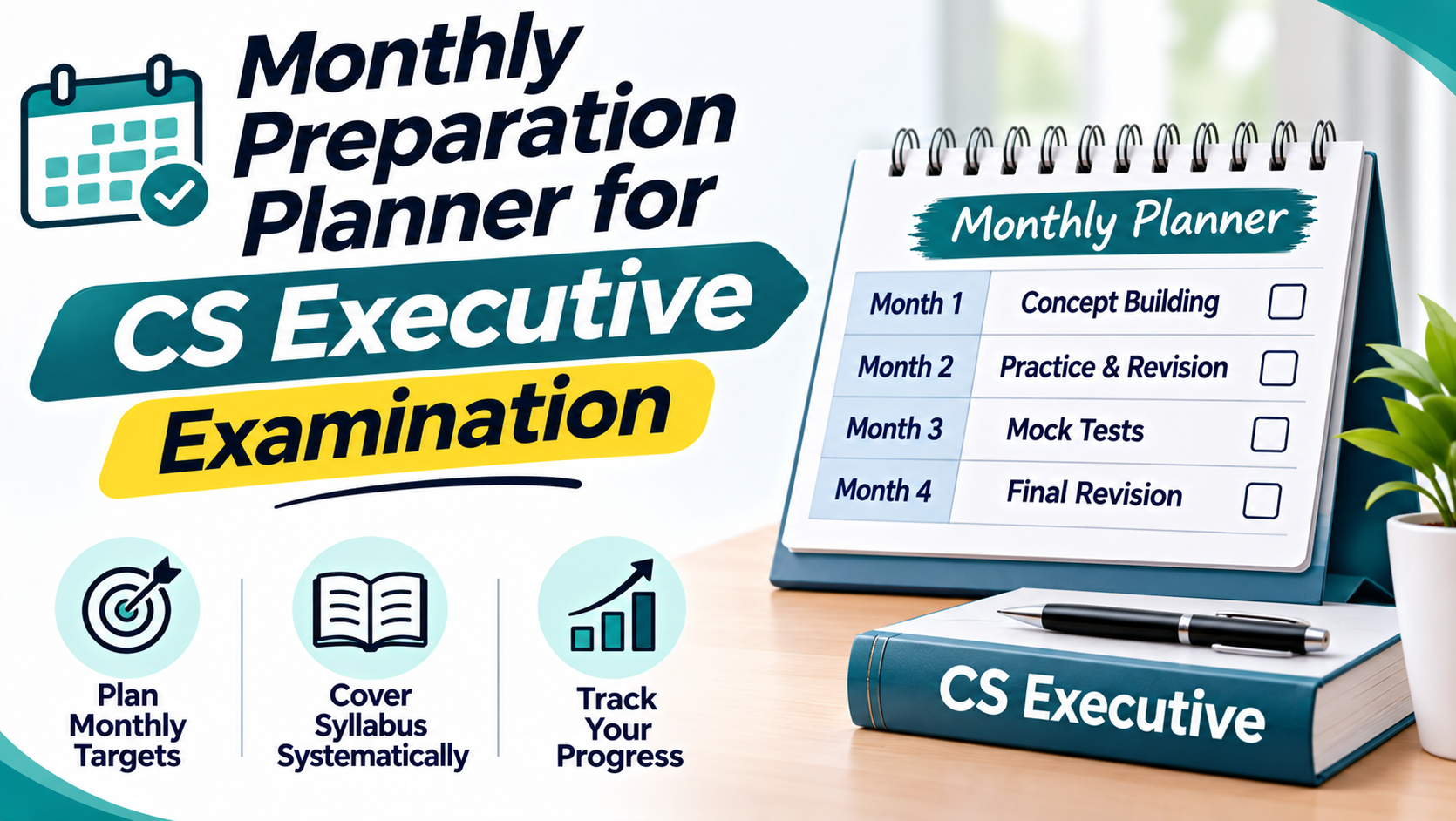
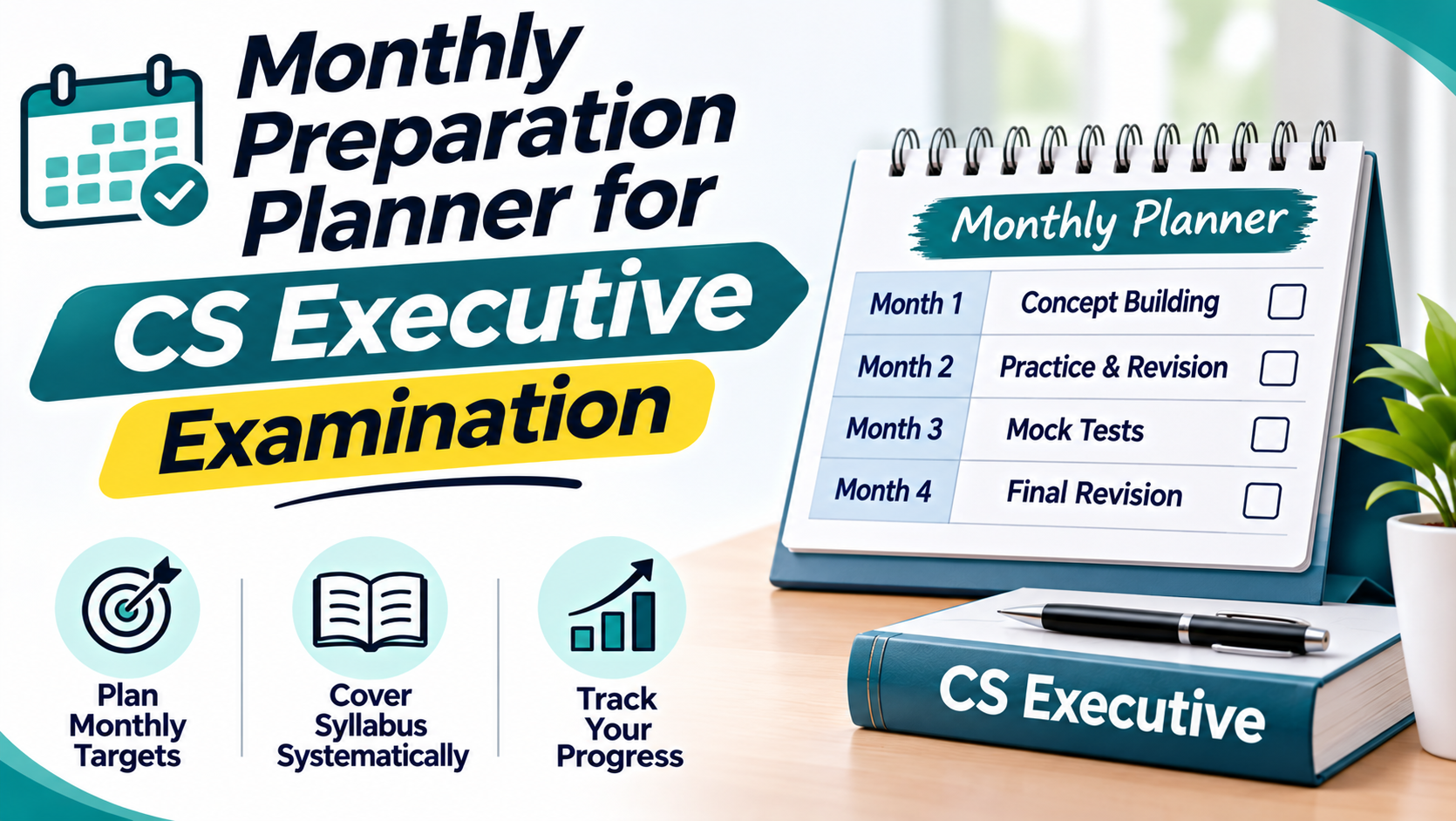
A simple planner can contain columns for week, subject, chapter or task, revision target, practice target and status. Fill in broad targets at the start of the month, then update completion weekly. Move unfinished tasks only after deciding their priority.
CS Exams Test Series can complement the plan through scheduled mock tests and performance review. Use results to identify the next month's priorities and balance syllabus coverage, revision and examination practice. Keep the planner aligned with official ICSI material.