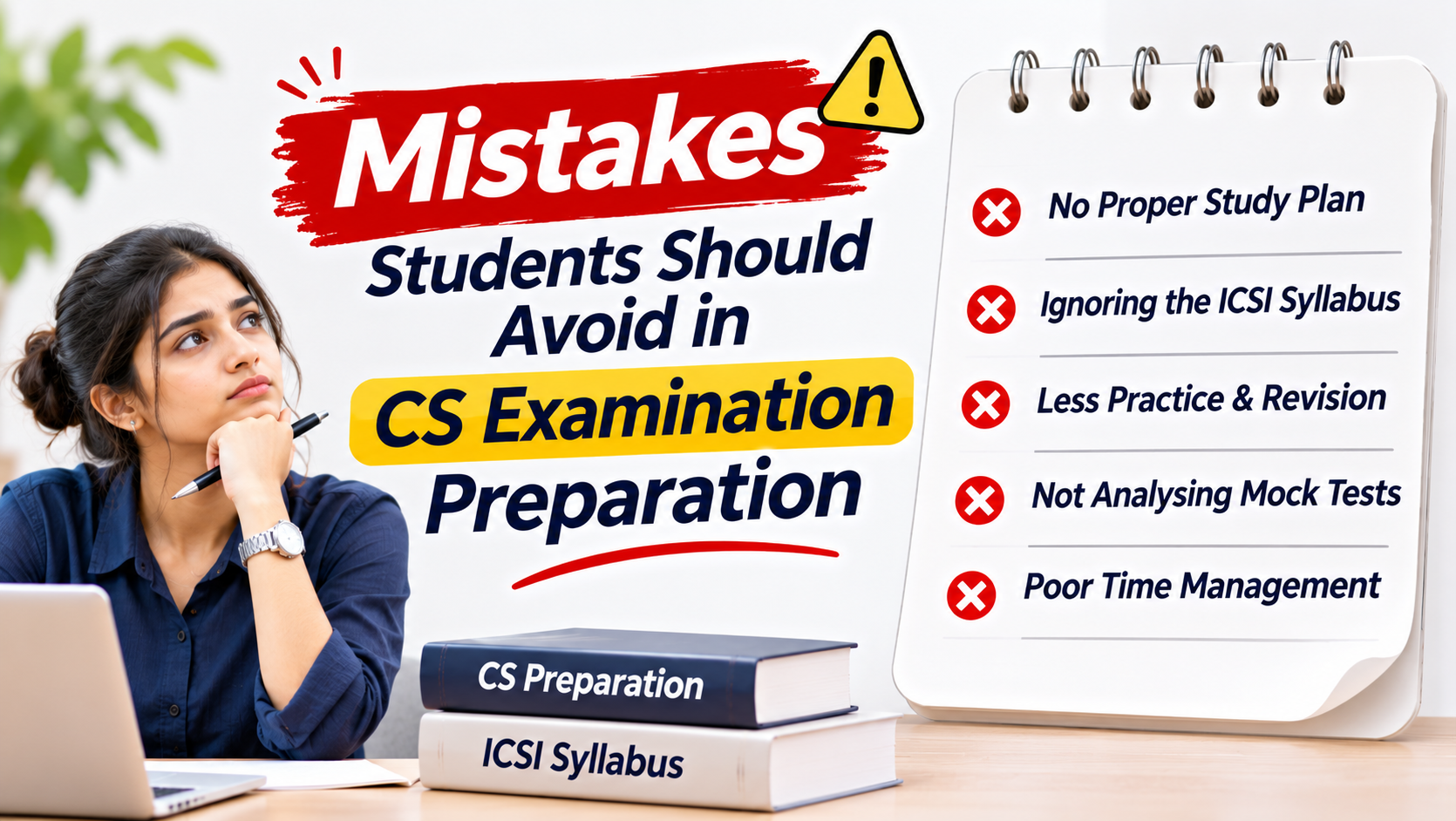
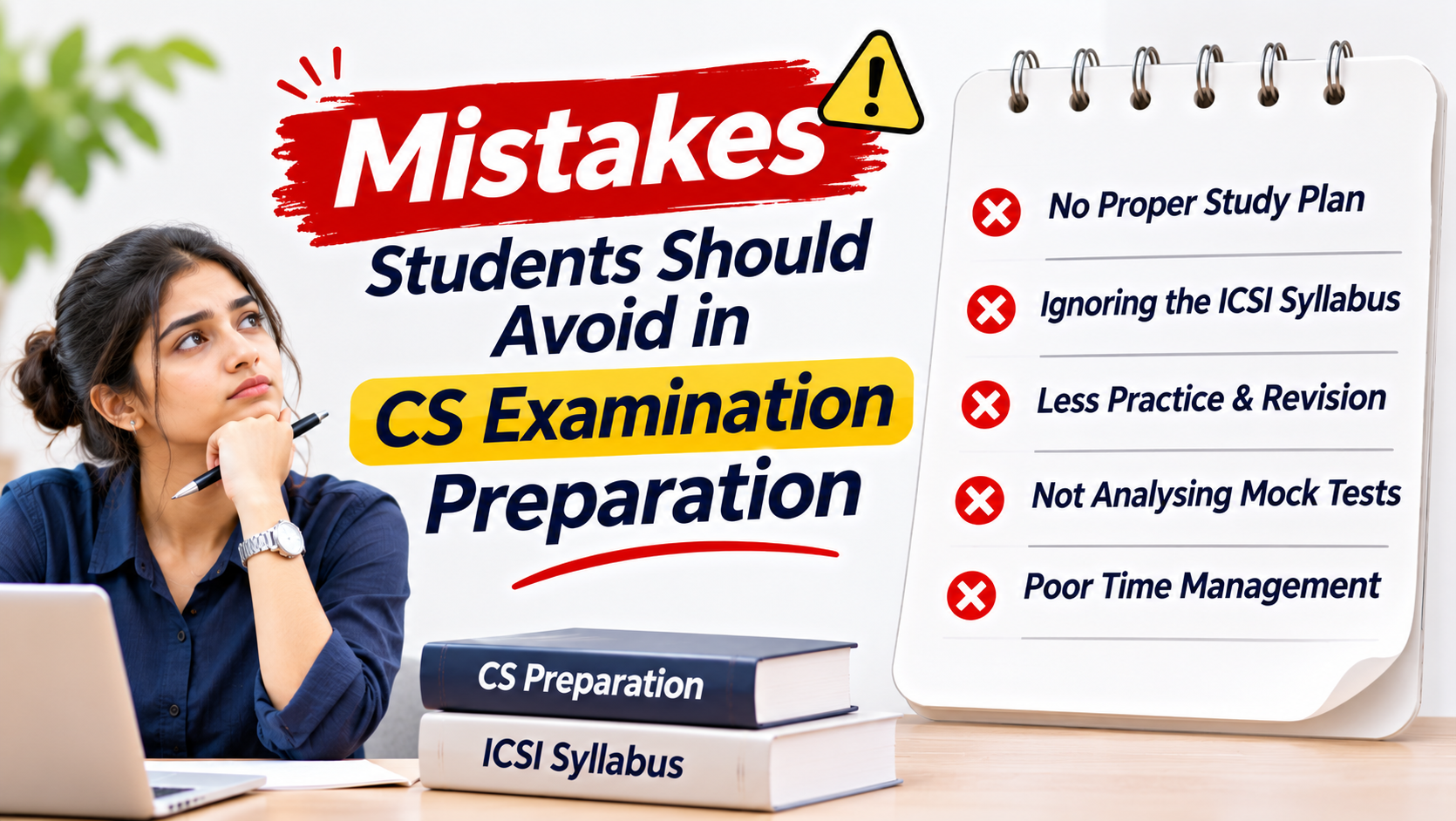
Many CS students put in long hours but do not always see the improvement they expect. The reason may not be a lack of effort. Sometimes the problem lies in how that effort is used—unplanned study, passive reading, incomplete revision or limited practice with examination-style questions.
Recognising these habits early can help you make better use of your preparation time. This guide covers common mistakes made during Company Secretary examination preparation and explains practical ways to correct them.
Studying without a clear plan
Starting each day by deciding what to study can waste time and lead to uneven coverage. Students may repeatedly choose familiar chapters while postponing difficult topics. Without a plan, it is also hard to know whether the syllabus is progressing at a suitable pace.
Create weekly targets for each paper. Include learning, question practice and revision rather than treating chapter reading as the only task. Keep targets realistic and review them at the end of the week.
A timetable should guide your preparation, not become a source of guilt. If a task takes longer than expected, adjust the next plan and identify the reason instead of abandoning the schedule.
Relying only on reading and highlighting
Reading a chapter several times can make the material look familiar, but it does not prove that you can recall or apply it. Highlighting too much can also make revision difficult because almost every line appears equally important.
After reading a section, close the book and write its main points from memory. Explain the concept aloud, prepare a short outline or answer a question. Then compare your attempt with the source and correct missing details.
Use highlighting selectively for definitions, conditions, exceptions or points that you repeatedly forget. Follow it with active recall so that the highlighted page becomes a prompt for learning rather than the whole revision method.
Ignoring the official syllabus and updates
Studying from outdated notes can create avoidable errors, particularly where laws, rules, procedures or syllabus coverage have changed. A resource shared by another student may relate to a different examination session.
Check the latest applicable ICSI syllabus, study material, amendments, notifications and examination instructions. Note the date and session for which each resource is intended. When a point is unclear, verify it from an authoritative source.
Use previous papers to understand question style, not to decide that unasked topics can be ignored. Preparation should cover the prescribed syllabus in a planned way.
Delaying answer writing
Some students wait until the entire syllabus is complete before attempting written answers. This can make the first timed paper feel unfamiliar. Knowing a concept and expressing it clearly under time pressure are different skills.
Start answer writing soon after learning a topic. First practise short answers without strict timing, then move to longer questions and timed sets. Focus on understanding the requirement, using relevant concepts and presenting a logical conclusion.
Review your writing for relevance, completeness, clarity and time. Where the question requires application, connect the facts to the relevant principle instead of reproducing a general textbook paragraph.
Using too many study resources
Collecting multiple books, notes, video courses and online summaries can create the impression of progress. In practice, switching between sources may reduce continuity and leave little time for revision.
Choose a small set of reliable resources: the applicable official material, one suitable explanation source if needed, question papers and a practice method. Add another resource only when you can identify a specific gap it will solve.
Keep your notes concise and linked to the main material. Avoid rewriting every chapter in a new format unless the process genuinely improves understanding or recall.
Avoiding mock tests and analysis
Mock tests reveal weaknesses that ordinary reading may not expose. Avoiding them because you fear a low score delays useful feedback. A practice score is information about your current preparation, not a final judgement of your ability.
Attempt tests under realistic time limits and follow the applicable paper instructions. After the test, classify mistakes: concept gap, forgotten point, misread question, weak application, incomplete answer or time shortage.
CS Exams Test Series can support structured timed practice and performance review. The important step is what you do after receiving feedback: revise the weak topic, practise a similar question and check whether the error is reduced in the next attempt.
Poor revision and backlog control
Leaving revision until the end makes it difficult to retain earlier chapters while completing new ones. A growing backlog can also make the timetable feel impossible.
Use short revision sessions throughout the week. Revisit older topics through recall questions, summary charts and mixed practice. If a backlog develops, divide it into essential tasks and spread them across realistic slots rather than trying to finish everything in one day.
Track the reason for each pending task. If a chapter is delayed because it is difficult, break it down. If it is delayed because the plan is overloaded, reduce the number of daily targets.
Neglecting time and wellbeing
Studying for very long periods without breaks can reduce concentration. An irregular routine may also make it harder to maintain consistent preparation over several months.
Use focused study blocks with short breaks, protect adequate sleep and include some movement in your day. Keep distractions away during study sessions and set a clear task before each block begins.
Plan around your real commitments. A timetable that allows for meals, rest and unexpected work is more likely to last than one that assumes every hour will be productive.
How to correct these habits
Choose one or two habits to correct first. For example, add a 20-minute active-recall session and one timed answer-writing practice to your current routine. Once these become consistent, improve another part of the plan.
Use a weekly review to check syllabus coverage, revision, practice and recurring errors. Keep the changes small enough to maintain, but specific enough to measure. Preparation improves through repeated adjustments, not through a perfect timetable created once.
Remember that the objective is not to study without mistakes. It is to identify mistakes early, understand why they occurred and prevent the same problem from repeatedly affecting your performance.
Quick Reference Table
| Common mistake | Why it causes difficulty | Practical correction |
| No weekly plan | Uneven coverage and delayed topics | Set realistic paper-wise weekly targets |
| Passive reading | Weak independent recall | Close notes and retrieve key points |
| Outdated material | Risk of learning incorrect or irrelevant details | Verify current ICSI material and updates |
| Late answer writing | Poor exam-time execution | Practise written answers from the start |
| No mock analysis | Repeated errors remain unnoticed | Maintain an error log and re-test |
How CS Exams Test Series Can Support Your Practice
Consistent practice helps you check whether your preparation is translating into exam-ready performance. CS Exams Test Series can be considered as a structured practice option for attempting questions under timed conditions and reviewing performance. Check the current paper coverage and use any feedback alongside the latest official ICSI syllabus and study material. A test series supports preparation; it does not replace concept learning, independent revision or official resources.