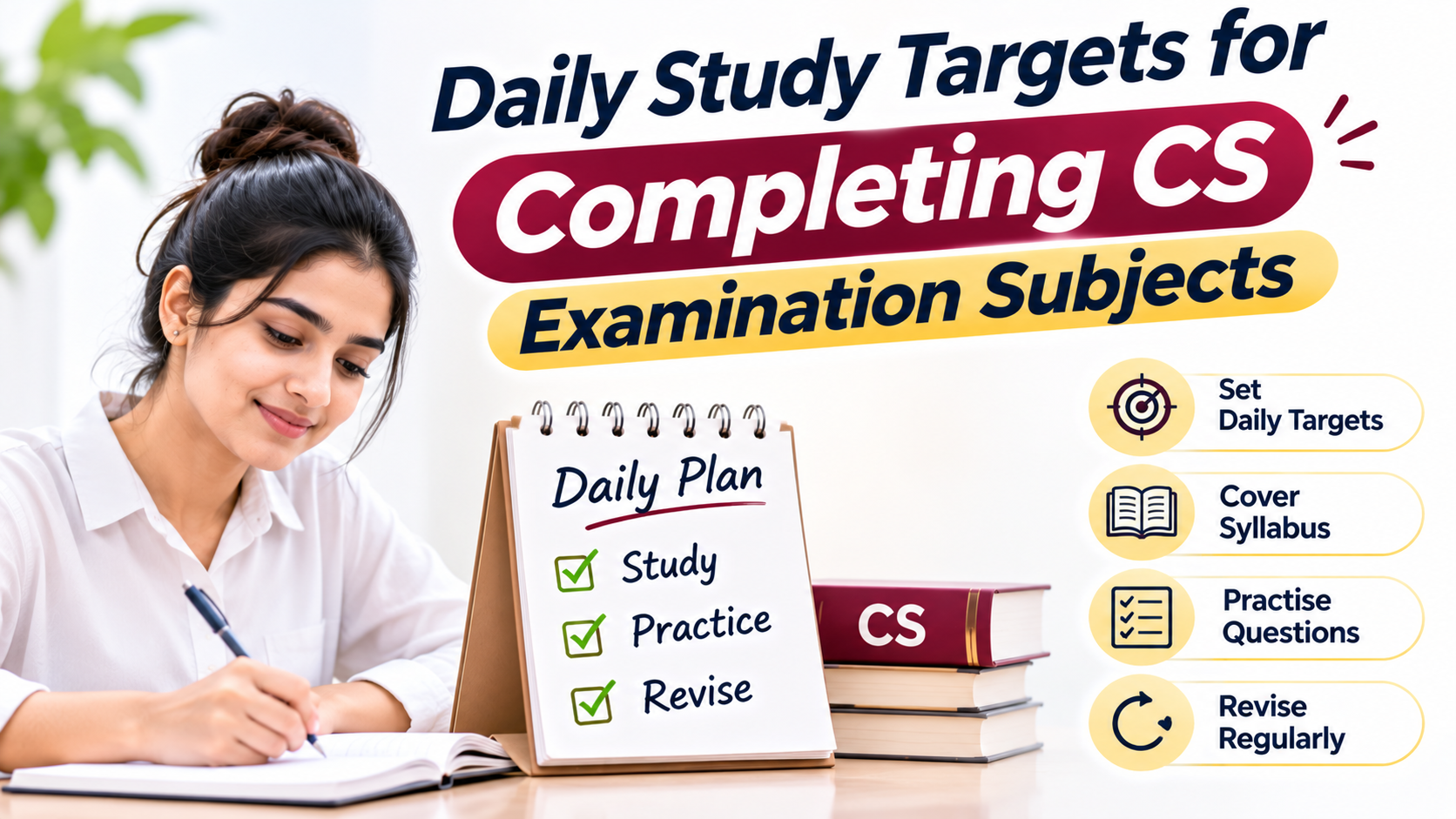
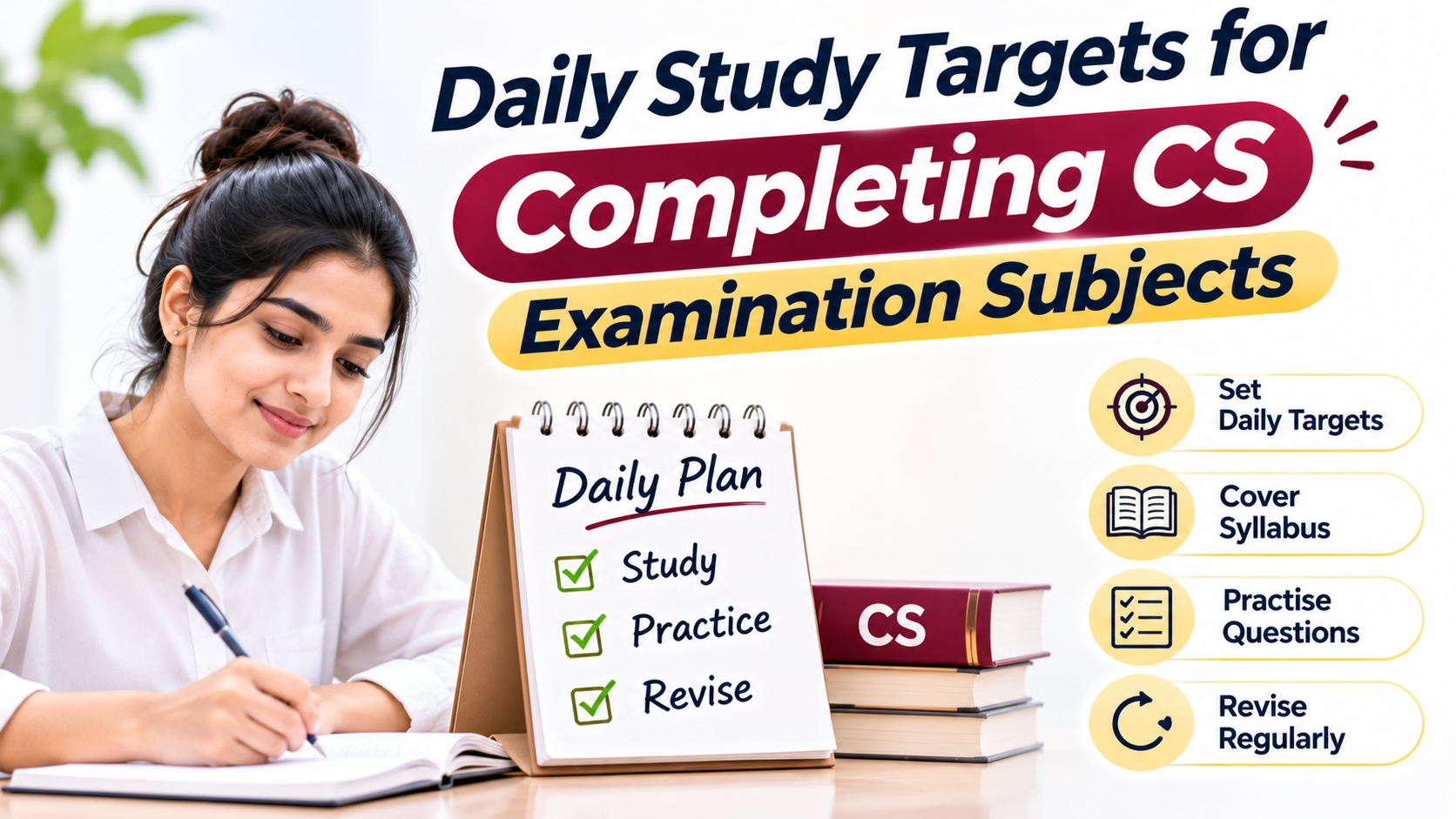
Preparing for Company Secretary examinations requires more than completing chapters. Students must understand concepts, remember important details and apply them accurately under time limits. A clear routine makes that work manageable.
A structured plan that combines learning, revision and practice helps students see where they are progressing and where they need to improve. CS Exams Test Series can support this process through planned examination-style practice and performance review.
Why daily targets matter
CS subjects demand different kinds of effort. Law requires understanding provisions and applying them to facts, taxation needs conceptual clarity and repeated problem-solving, while descriptive papers require organised writing. Daily targets help you decide what deserves attention instead of treating every chapter alike. They also break a large syllabus into manageable tasks, making progress visible and helping you notice delays before they become difficult to recover from.
Assess the syllabus honestly
List every subject, chapter and smaller topic using the current ICSI syllabus. Mark each as not started, partly understood, revised or tested. Add a realistic estimate for learning, practice and revision. A topic should not be marked complete merely because you watched a lecture or read it once; check whether you can explain its key ideas and answer questions without depending on notes.
Turn broad intentions into measurable tasks
Replace vague plans such as 'study Company Law' with a clear outcome: understand a selected topic, prepare a concise summary and attempt a set of application questions. Split difficult chapters into separate sessions for concept learning, recall and question practice. A task is useful when you can tell at the end of the session whether it has actually been completed.
Build a balanced day
Schedule a demanding topic during the hours when your concentration is usually strongest. Follow it with a different kind of task, such as numerical practice after legal reading, to reduce monotony. Include a short active-revision block for an older topic and a few minutes at the end of the day to record progress. Keep the plan realistic and allow time for meals, rest and personal commitments.
Connect daily tasks to weekly milestones
At the start of each week, decide what should be completed in every subject. One paper may need a new chapter, another may need question practice and a third may need revision. Leave flexible time for tasks that take longer than expected. At the weekly review, understand why work was delayed and adjust the next plan rather than carrying an unlimited backlog forward.
Revise from the beginning
Do not postpone revision until the entire syllabus is finished. Revisit a topic briefly the next day, test it again after a few days and include it in weekly revision. Use active recall: close the book, write the key points, explain a provision aloud or solve a question from memory. Then compare your response with the study material and correct missing details.
Measure output, not only hours
Hours at a desk do not prove that learning has taken place. Track topics understood, questions attempted, answers written, errors corrected and revision completed. A simple sheet with columns for topic, task, completion, confidence and next revision date is enough. If a topic remains weak after repeated study, change the method by using examples, a different explanation or teacher support.
Use tests as checkpoints
Chapter tests and sectional papers reveal whether you can retrieve and apply concepts. Full-length tests later show how well you manage time and mixed questions. The CS Exams Test Series can provide structured practice; after each attempt, classify lost marks as conceptual errors, forgotten facts, weak application, presentation problems or time shortage. Convert the findings into the next day's targets.
Avoid unrealistic planning
A timetable that fills every available minute has no room for difficult chapters or unexpected commitments. Avoid vague tasks, excessive catch-up plans and copying another student's routine without considering your own progress. If a task repeatedly takes longer than expected, revise the estimate. Consistent work over several weeks is more effective than occasional exhausting study days.
A simple end-of-day routine
Before finishing, record what was completed, what remains and why anything was delayed. Choose the first task for tomorrow and keep the required material ready. On a difficult day, complete a smaller minimum task such as a short recall session or a few questions rather than abandoning the routine. Resume the normal plan when circumstances allow.
Quick Reference Table
| Daily block | Suggested task | Evidence of completion |
|---|---|---|
| Focused learning | Study a new or difficult topic | Explain key concepts without notes |
| Practice | Solve questions or case studies | Attempted questions and marked errors |
| Revision | Recall an older topic | Key points reproduced from memory |
| Daily review | Update progress tracker | Next task and revision date recorded |