The CS Professional syllabus can feel demanding because students must manage detailed concepts, practical application, legal updates and examination-oriented writing. Trying to complete every subject at the same speed often leads to an uneven plan, with unfinished topics and insufficient revision.
A practical roadmap divides the syllabus into manageable stages and gives each stage a clear purpose. This article explains how to map subjects, set weekly targets, revise completed topics and use tests to measure progress.
Confirm the applicable syllabus and timeline
Check the syllabus and subjects applicable to your attempt through official ICSI information. Review modules, paper structure, study resources and relevant updates. Do not build a plan using an old syllabus or a timetable for a different attempt.
Note the examination dates and calculate the study time available. Keep room for revision, tests and unexpected interruptions. Work backwards from the examination while recognising your current preparation level.
Assess your starting point subject by subject
Create a tracker and classify chapters as not started, in progress, completed once, revised or tested. This is more accurate than saying a subject is nearly finished. A chapter should not be marked complete only because you watched a lecture or read it once.
Identify topics that are difficult because of unfamiliar concepts, extensive provisions, calculations or application requirements. Also mark areas you understand well. Distribute time according to need rather than dividing every subject equally.
Divide the syllabus into preparation phases
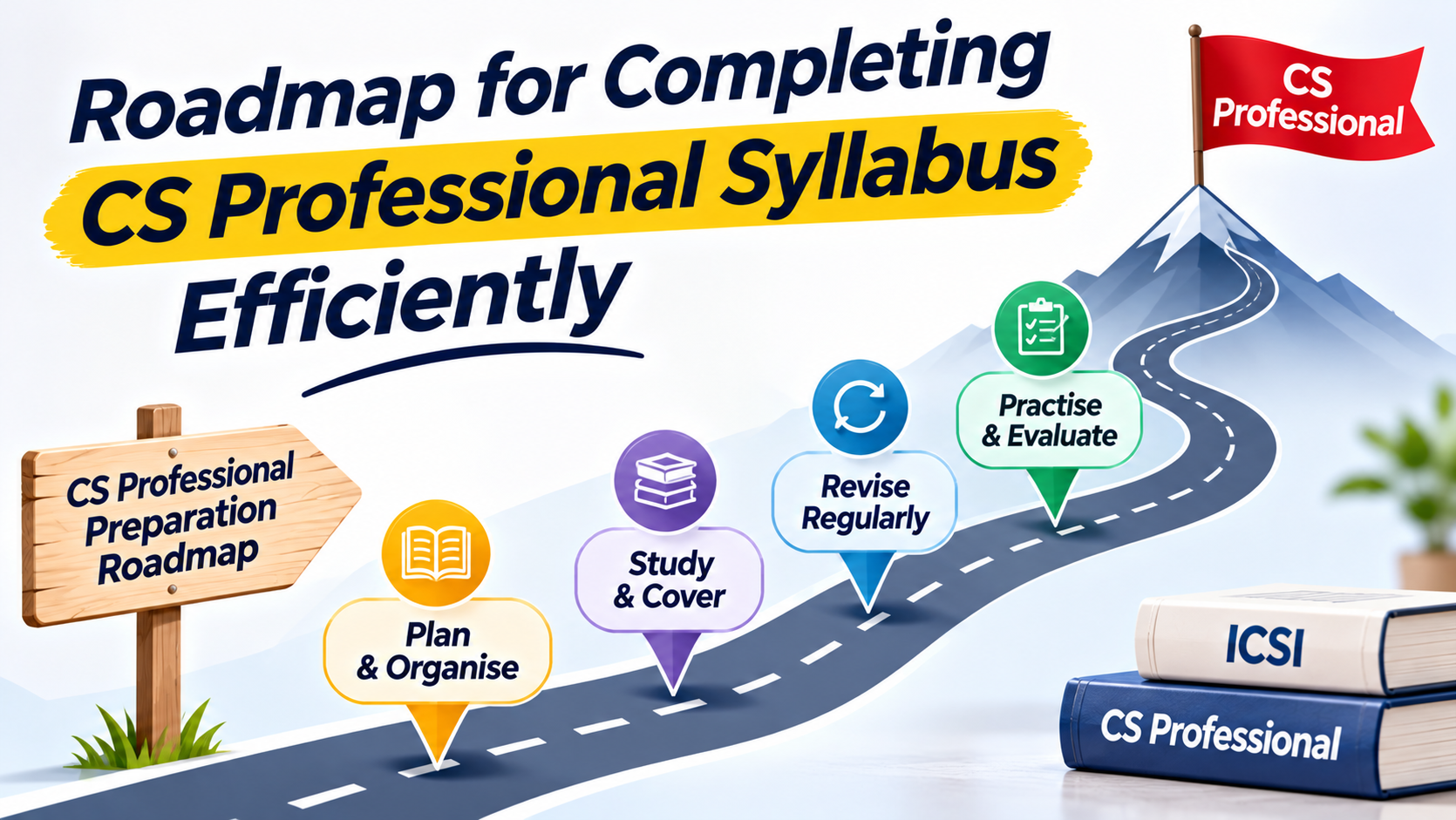
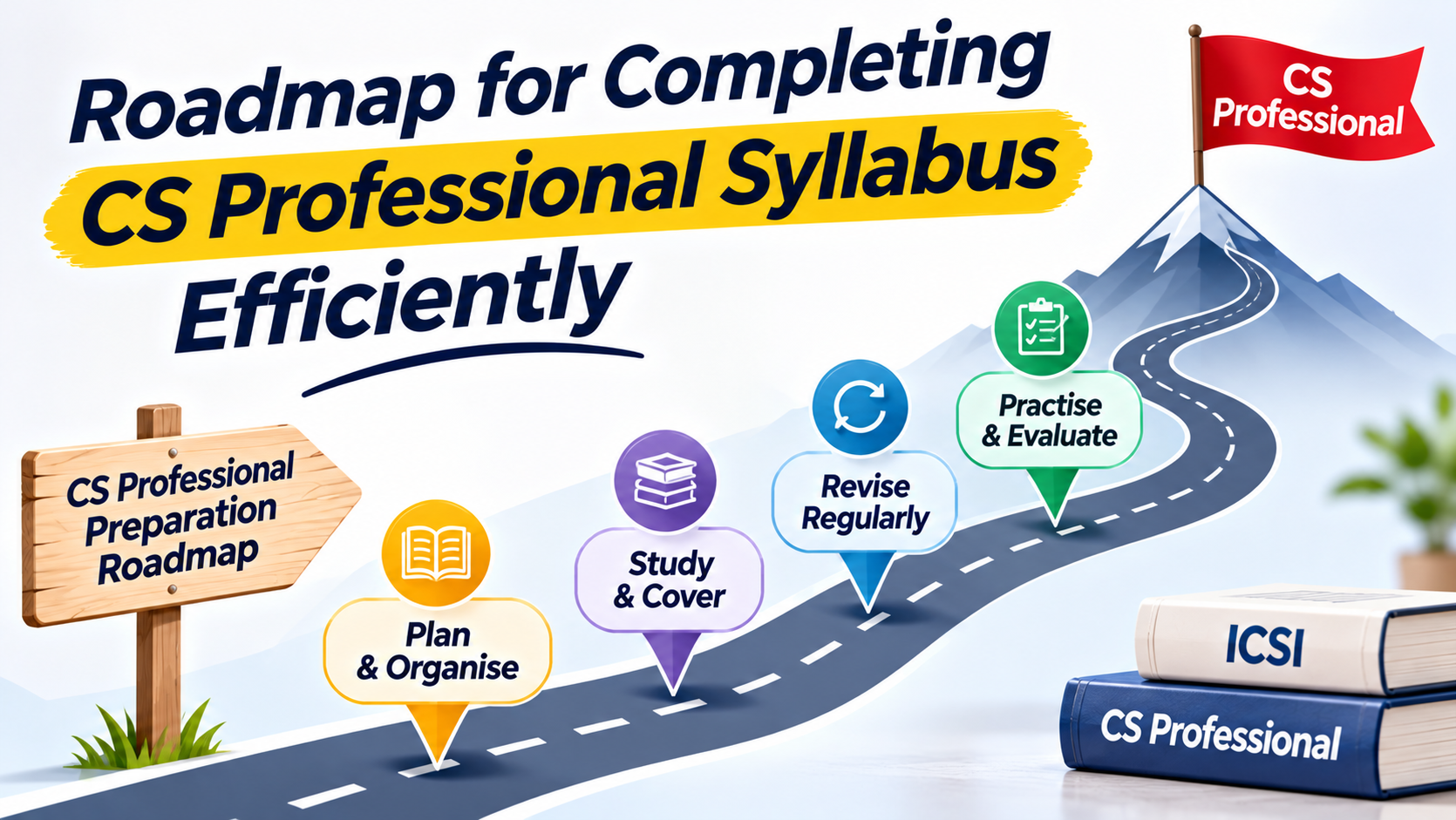
Use four broad phases: first coverage, consolidation, revision and examination practice. First coverage builds understanding. Consolidation brings notes, examples and chapter questions together. Revision strengthens recall, while practice develops speed and presentation.
The phases can overlap. You do not need to finish the entire syllabus before revisiting earlier topics. A short weekly revision block prevents completed chapters from becoming unfamiliar. Adjust each phase to your available time.
| Preparation area | Recommended focus |
|---|---|
| Understanding | Build clarity on concepts and applicable provisions. |
| Application | Practise case studies and scenario-based questions. |
| Revision | Revisit key topics at planned intervals. |
| Presentation | Structure answers around the exact requirement. |
| Assessment | Attempt timed tests and analyse mistakes. |
Set measurable weekly and daily targets
Convert phases into weekly outcomes such as chapters covered, questions attempted, provisions revised or case studies completed. Avoid targets that only say 'study for several hours'. Time matters, but a clear output makes progress easier to judge.
Break weekly targets into daily tasks and leave a buffer for delays. If a topic takes longer than expected, decide what can move without disturbing the entire plan. A realistic timetable is more effective than an ambitious one that collapses.
Prioritise difficult and high-effort topics
Give additional time to chapters requiring repeated explanation, numerical practice or careful interpretation. Start difficult topics early enough to revisit them. Leaving every challenging chapter for the final weeks creates pressure and reduces revision time.
Prioritisation does not mean ignoring other areas. Maintain contact with the full syllabus and review topics that are easy to forget. Use test results and an error log to decide where extra time will help most.
Use focused sessions and active learning
Plan each session around one task: understand a concept, solve questions, revise a chapter or analyse a case study. Keep the required material ready and remove avoidable distractions. A defined task makes it easier to begin and assess completion.
Use active methods such as recalling a provision without looking, solving a fresh problem, explaining a concept aloud or writing a short answer. Passive reading has a place, but should not be your only method.
Build revision into the roadmap
Do not postpone all revision until the syllabus is complete. After finishing a chapter, schedule a short review, revisit it after a few days and add another review during consolidation. Adjust intervals according to difficulty and recall.
Prepare concise notes containing key concepts, provisions, formulas, exceptions and common mistakes. Link them to the main study material so details can be verified. Notes should support recall, not replace understanding.
Include case studies and answer writing
Practise case-based questions as you complete relevant chapters instead of waiting for the final revision period. This helps connect provisions with practical situations and builds the habit of applying concepts to facts.
Write answers under time limits. Check whether you identified the issue, used the correct legal or professional basis, applied it to the facts and reached a conclusion. Record recurring weaknesses for weekly review.
Use mock tests to check readiness
Chapter tests verify understanding soon after topic completion. Cumulative tests show whether earlier chapters remain accessible, while full-length mocks assess time management and answer presentation. Use a suitable mix as preparation progresses.
Analyse each test instead of focusing only on marks. Classify mistakes as knowledge gaps, misinterpretation, incomplete application, poor structure or time pressure. Add specific correction tasks to the next week's plan.
Final-stage planning and CS Exams Test Series
In the final stage, reduce new material where possible and focus on revision, important updates, question practice and full-length papers. Confirm that notes and references match the applicable syllabus. Resolve the most important doubts before the examination.
CS Exams Test Series can be used during the testing phase to practise examination-style questions and review performance. Let results guide final revision priorities. A strong roadmap combines official material, consistent self-study, current updates and timed assessment.