Preparing for Company Secretary examinations requires more than completing chapters. Students must understand concepts, remember important details and apply them accurately under time limits. A clear routine makes that work manageable.
A structured plan that combines learning, revision and practice helps students see where they are progressing and where they need to improve. CS Exams Test Series can support this process through planned examination-style practice and performance review.
Understand what the question asks
Identify the instruction word and the subject of the question. Explain, analyse, distinguish, discuss and advise require different approaches. Read all facts, dates and conditions carefully. In a case-based question, identify the issue and avoid beginning with a general chapter summary that does not answer the situation.
Use a clear structure
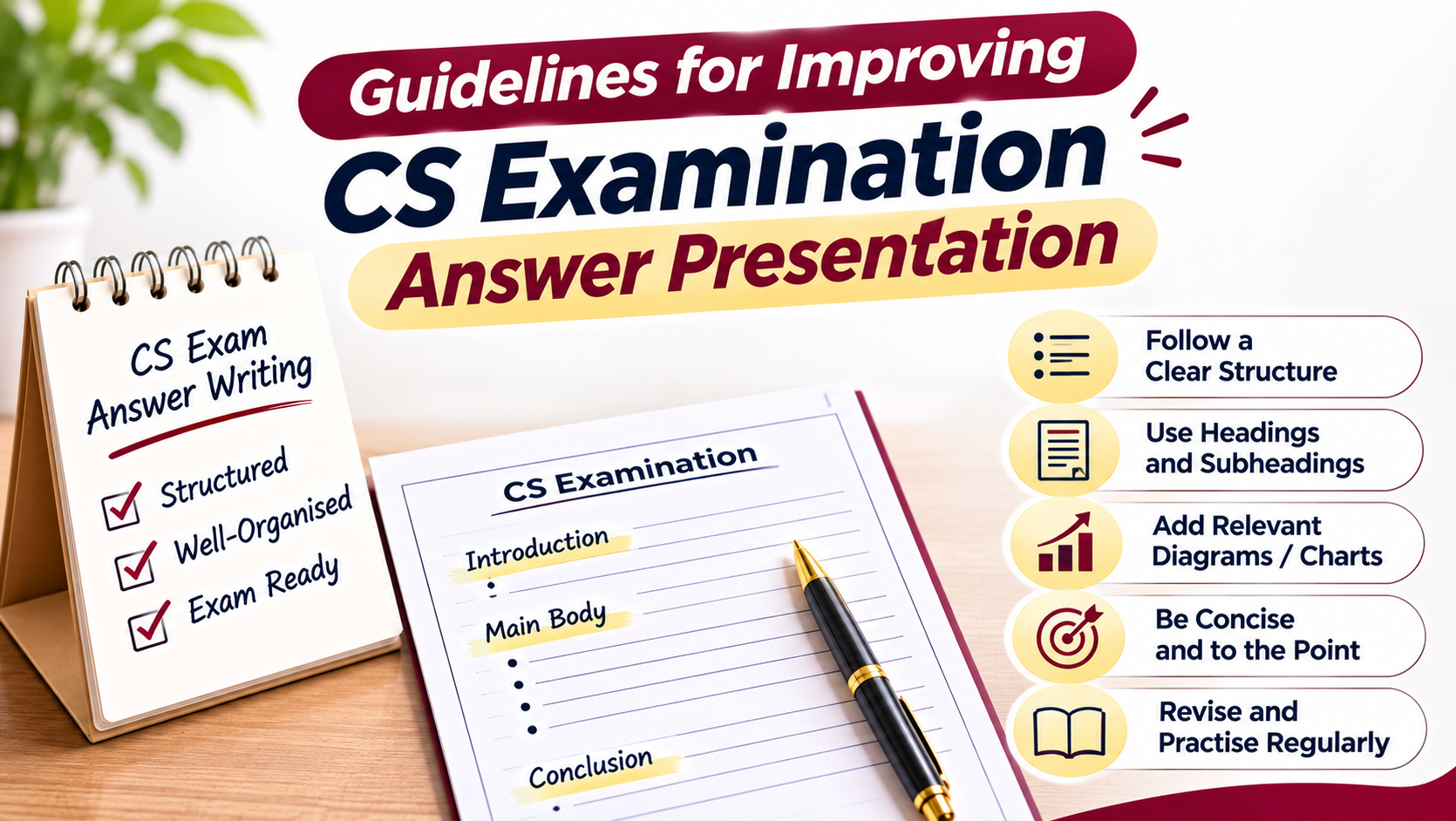
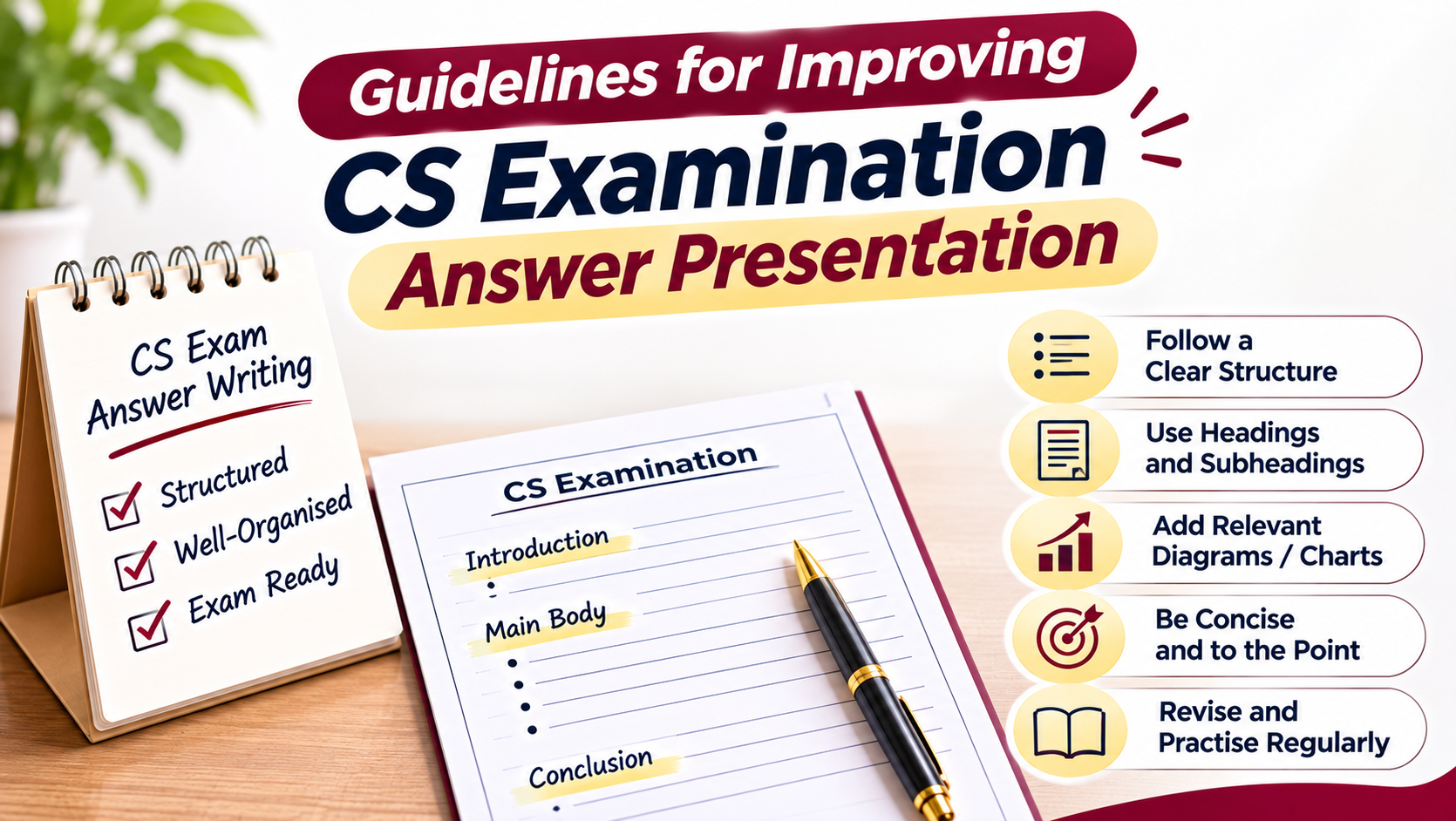
A strong answer usually begins with a direct opening, develops relevant points in logical order and ends with a conclusion where appropriate. For a legal problem, use issue, applicable rule, application to facts and conclusion. For descriptive answers, use focused paragraphs and meaningful subheadings where they improve readability.
Present legal answers accurately
Identify the relevant rule and use correct terminology. Include conditions and exceptions that matter to the facts. Avoid lengthy quotations when a concise explanation answers the question. Apply the rule to the situation and explain why the facts satisfy or fail to satisfy its conditions; do not leave the conclusion unsupported.
Structure case-based answers
Separate relevant facts from background information, identify the issue and connect it to the applicable principle. If several issues arise, address them separately. A logical sequence—issue, rule, application and conclusion—helps the evaluator follow your reasoning and demonstrates more than simple recall.
Use headings and tables purposefully
Numbered points and subheadings help organise longer answers. A table is useful for comparisons or classifications; numbered steps suit a process. Avoid excessive underlining, decorative boxes and formatting that consumes time. Presentation should support the answer rather than compete with its substance.
Keep the answer relevant and proportionate
Do not write everything you remember about a chapter. Use the marks and instruction word to judge the depth required, and cover all essential points. Remove repeated statements and unrelated background. Concise writing is effective when it remains complete and addresses the question directly.
Maintain readable handwriting and page layout
Write at a pace that keeps handwriting legible. Keep question numbers clear, leave reasonable spacing and organise each answer so that the evaluator can follow it. Practise at examination speed rather than trying to change your handwriting dramatically just before the paper.
Manage time while writing
Allocate time across questions according to marks and the paper pattern, keeping a small buffer for review. Do not spend too long perfecting one answer. Practise with a clock and record how long different question types take. If a question is difficult, move on after writing the points you can support.
Review answers and use feedback
After a practice paper, check whether each answer followed the instruction word, included relevant concepts and applied facts correctly. Look for missing steps, unsupported conclusions and unclear wording. The CS Exams Test Series can offer timed practice and feedback; turn recurring comments into specific improvement tasks.
Build a regular writing routine
Start with short answers and selected case studies, then progress to full papers. Practise different instruction words and subject areas. Use a checklist: did you understand the question, select the correct rule, explain relevant points, apply facts and reach a conclusion? Repeated practice makes clear presentation a habit.
Quick Reference Table
| Answer type | Suggested structure | Presentation focus |
|---|---|---|
| Legal problem | Issue → Rule → Application → Conclusion | Accurate rule and fact-based reasoning |
| Distinguish | Opening → Comparison table → Closing point | Clear parallel points |
| Descriptive | Introduction → Headings → Explanation | Relevant, ordered content |
| Procedure | Purpose → Numbered steps → Outcome | Correct sequence and terminology |