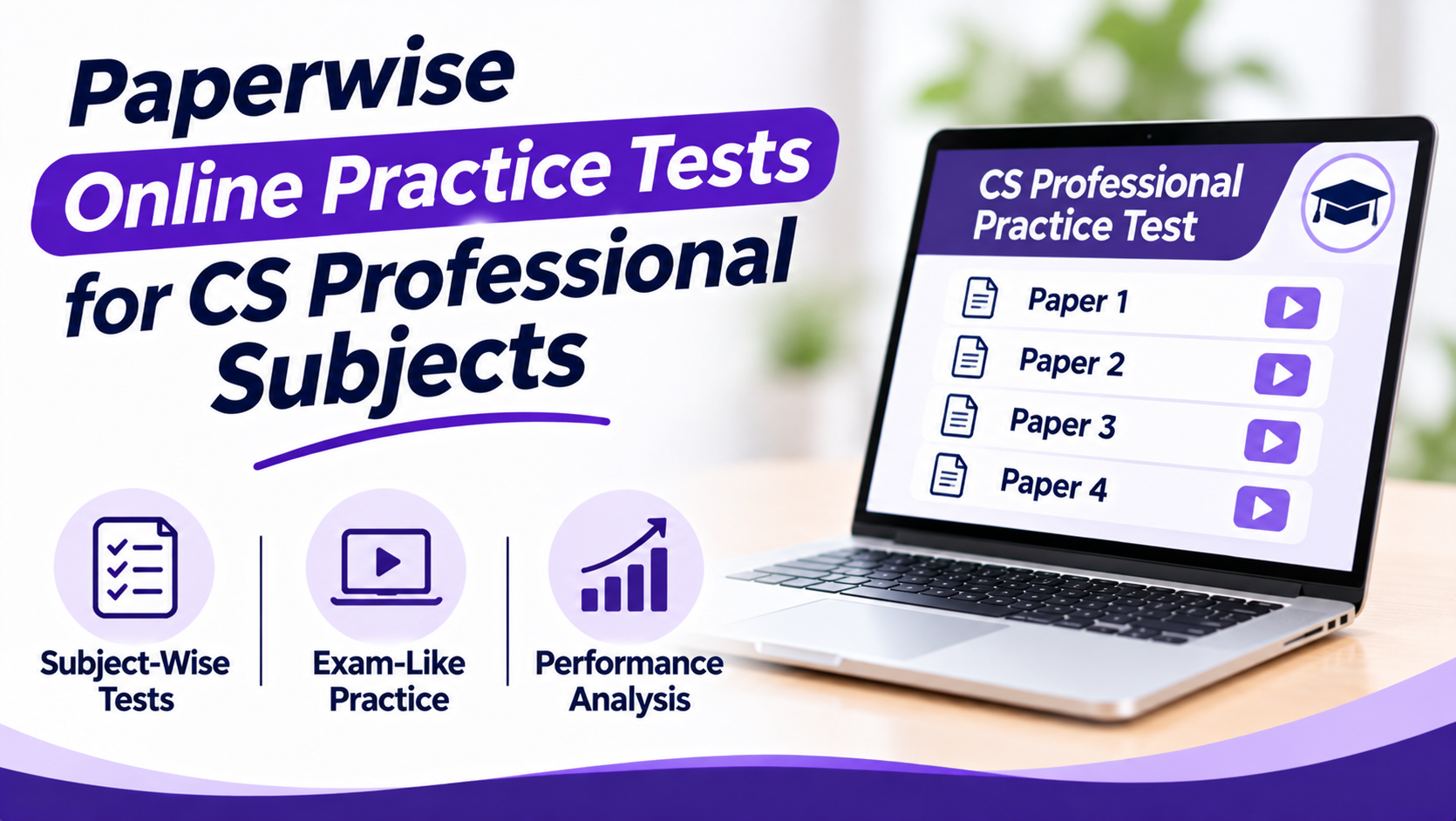
Paperwise practice gives each CS Professional subject a clear assessment plan. Different papers demand different skills, from accurate recall of provisions to case-based application and structured practical answers. A separate test for each paper helps students identify subject-specific gaps instead of relying only on an overall preparation score.
Understand the Examination Requirements
Start with the current ICSI syllabus for your examination session. List each paper and divide it into modules or topics. Mark what is studied, revised and practised. A paper should not be considered complete merely because lectures or reading have finished; independent question practice and review are also necessary.
Why Regular Practice Matters
Use topic tests soon after studying a module, then move to mixed tests as coverage increases. Complete paper tests should follow the applicable pattern and duration. This gradual progression checks understanding early and later develops the ability to manage a full paper.
Create a Structured Preparation Plan
Choose question formats according to the subject. Practise descriptive answers, case-based application, short questions and practical problems wherever relevant. For case-based questions, identify the issue, relevant principle and application to the facts. For practical questions, show the method and label working clearly.
Move From Topic Tests to Full Papers
Timed practice helps students understand how long they spend on each question. Plan time according to marks and complexity, avoid spending too long on one response and reserve a short period for checking. Compare planned time with actual time after each attempt.
Practise Different Question Formats
Review each answer against the question requirement and relevant study material. Record concept gaps, memory lapses, misinterpretation, incomplete coverage and presentation issues. Write a short corrective action and revisit it before the next test.
Build Time Awareness
A weekly plan can rotate new learning, practice and revision. For example, use two sessions for the current paper, one for a previously studied paper, one for timed practice and one for review. Adapt the routine to your classes and available time rather than following an unrealistic timetable.
Analyse Results and Correct Mistakes
An online CS test series can organise paper-wise tests, timed attempts and performance feedback. Use it alongside ICSI study material, reference resources and self-study. CS Exams Test Series can be part of this routine, provided the content and pattern are relevant to your examination session.
Create a Balanced Weekly Routine
Do not practise only the subjects you enjoy, attempt tests with notes open when measuring independent performance or collect scores without analysis. Avoid scheduling many full papers without leaving time to review and correct mistakes.
Use Feedback to Improve Preparation
Paperwise online practice tests help CS Professional students assess each subject with a clear purpose. Map the current syllabus, practise suitable question formats, work under time limits and review errors. A consistent cycle of study, testing and correction can make preparation more organised.