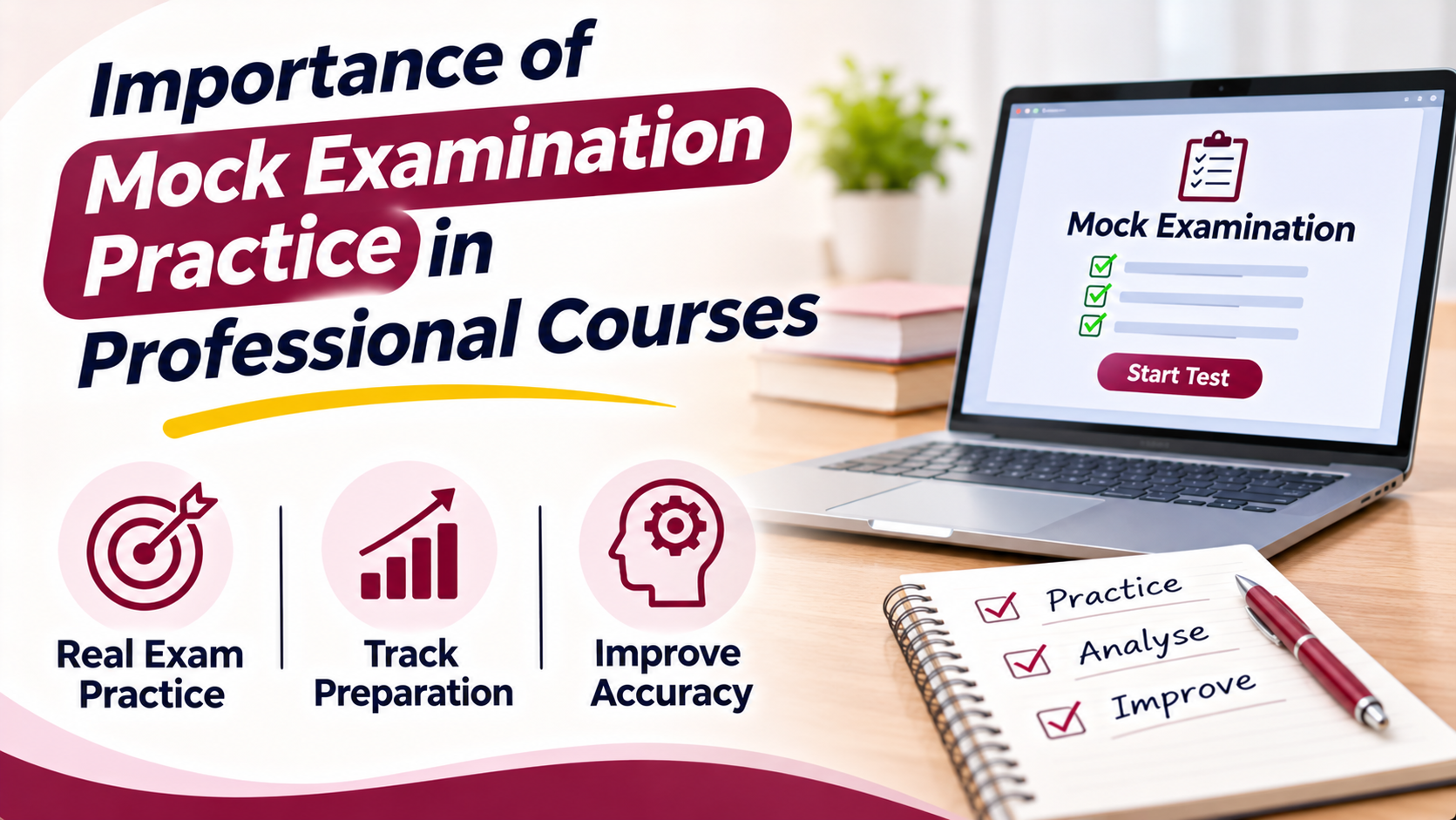
Professional courses demand more than familiarity with textbooks. Students must understand complex concepts, apply them to practical situations and communicate answers within a fixed examination period. Even well-prepared candidates can struggle if they have not practised completing a full paper under time pressure.
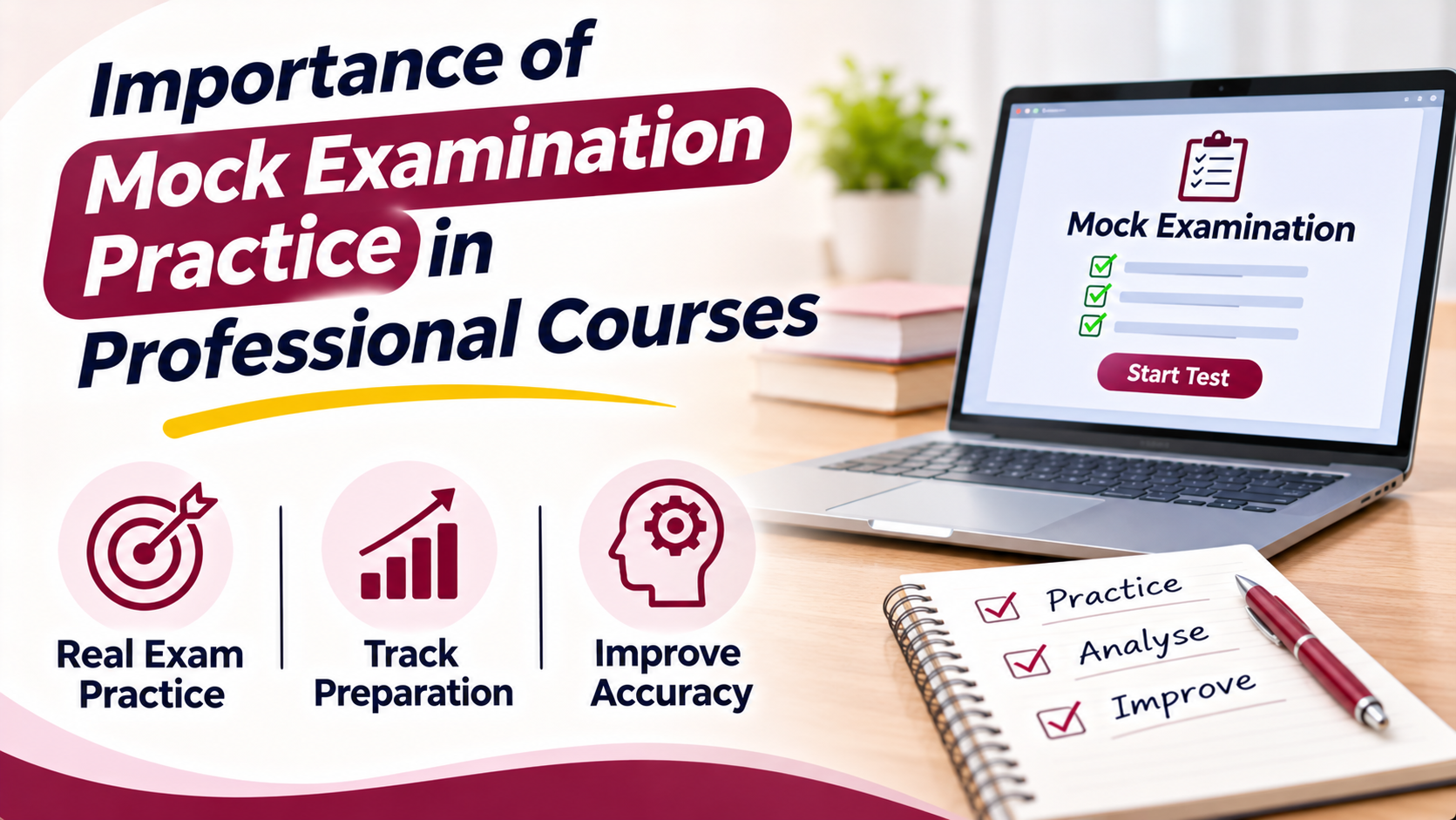
Mock examinations help bridge the gap between studying and performing. They provide a structured way to test knowledge, develop time-management habits and identify weaknesses before the actual examination. Their real value comes from reviewing each attempt and acting on what it reveals.
Why mock examinations are important
Classroom learning and self-study help build subject knowledge, but neither fully recreates the demands of an examination. During a paper, students must interpret questions independently, decide which points are relevant, organise their answers and keep track of time. Mock examinations bring these tasks together in one practice session.
They also help students become familiar with the mental pressure of a timed assessment. When the format and routine are practised regularly, the examination environment may feel less unfamiliar. This does not remove all pressure, but it gives students a chance to develop a steady approach.
Test knowledge and application together
A student may remember a provision or definition but find it difficult to apply it to a case-based question. Similarly, knowing a formula does not always mean being able to select and use it correctly in a lengthy problem. A mock paper tests whether knowledge can be used in the way the question requires.
After the attempt, identify whether errors came from incomplete knowledge, misunderstanding the requirement or difficulty applying the concept. This distinction matters because each issue needs a different form of revision.
Develop time-management skills
Professional examinations often contain questions of different lengths and difficulty levels. Spending too much time on one answer can leave other questions incomplete. Mock tests provide an opportunity to estimate the time required for each section and practise moving forward when a question becomes time-consuming.
Prepare a time plan based on marks and question requirements. Record actual completion times during practice and compare them with your plan. Adjust the allocation where necessary rather than following a schedule that repeatedly proves unrealistic.
Improve answer structure and presentation
A complete answer should be relevant, organised and easy to evaluate. In theory papers, students need to identify the issue, explain the applicable principle and address the requirement. In practical papers, workings, calculations and conclusions should be presented clearly.
Use mock examinations to practise writing under realistic conditions. After checking the paper, note whether important points were omitted, whether the answer was unnecessarily long or whether the conclusion directly addressed the question.
Identify gaps before the final revision stage
Mock examinations can expose chapters that have been read but not understood well enough for independent application. They may also reveal recurring errors, such as missing key terms, overlooking facts, selecting an incorrect method or rushing the final section.
Maintain a short error log. Include the topic, type of mistake and corrective action. Review this log before the next mock test to check whether earlier problems have been addressed.
Build confidence through consistent practice
Confidence develops when students have evidence that they can handle a paper. Completing timed tests, learning from mistakes and seeing gradual improvement can make preparation feel more manageable. Confidence should come from realistic practice rather than from scores alone.
Avoid taking several mocks back-to-back without reviewing them. One carefully analysed paper can provide more useful direction than multiple attempts where the same errors continue.
Use different types of mock assessments
Topic-based tests are useful after completing a chapter because they check understanding while the content is fresh. Subject-wise papers help students connect different chapters, while full-length mock examinations test stamina and overall paper strategy.
Choose the format according to your preparation stage. Early practice should identify concept gaps; later practice should focus more on integration, timing and presentation. Keep a balance between assessment and revision.
Review every attempt systematically
After the test, compare your answers with the suggested answers or evaluation feedback. Review incorrect responses, incomplete answers and questions that took too long. Also examine correct answers that were reached through guessing or uncertain reasoning.
Turn the review into a short action plan. You might need to revise a provision, practise a particular question type, improve calculation steps or change your time allocation. Complete those actions before attempting another similar paper.
Avoid common mistakes in mock-test practice
Treating a mock as a score-only activity is one of the biggest mistakes. Other problems include checking notes during a timed test, ignoring instructions, attempting papers that do not match the current syllabus and postponing analysis until much later.
Use relevant papers, follow a fixed duration and review the attempt soon after completion. Do not compare every score with another student's result; focus on your own accuracy, coverage and improvement.
How CS Exams Test Series can support preparation
A structured CS Exams Test Series can give students a planned opportunity to practise subject-wise and full-length papers. Look for syllabus relevance, clear test instructions, realistic timing and feedback that helps identify areas for improvement.
Use mock assessments alongside the applicable ICSI study material and official resources. A test series is a practice aid, not a replacement for learning the subject. The benefit comes from combining preparation, timed attempts and corrective revision.
Quick Reference Table
| Preparation stage | Recommended assessment | Main objective |
|---|---|---|
| After a chapter | Topic-based test | Check concept understanding |
| After completing a subject | Subject-wise mock | Connect chapters and practise timing |
| Revision stage | Full-length paper | Build stamina and paper strategy |
| After every attempt | Performance review | Identify errors and plan correction |
Conclusion
Consistent preparation depends on understanding the subject, practising relevant questions and reviewing mistakes honestly. Use the applicable ICSI study material as your foundation and make each assessment part of a clear improvement plan. A structured approach with CS Exams Test Series can help you practise with discipline and identify where further revision is needed.