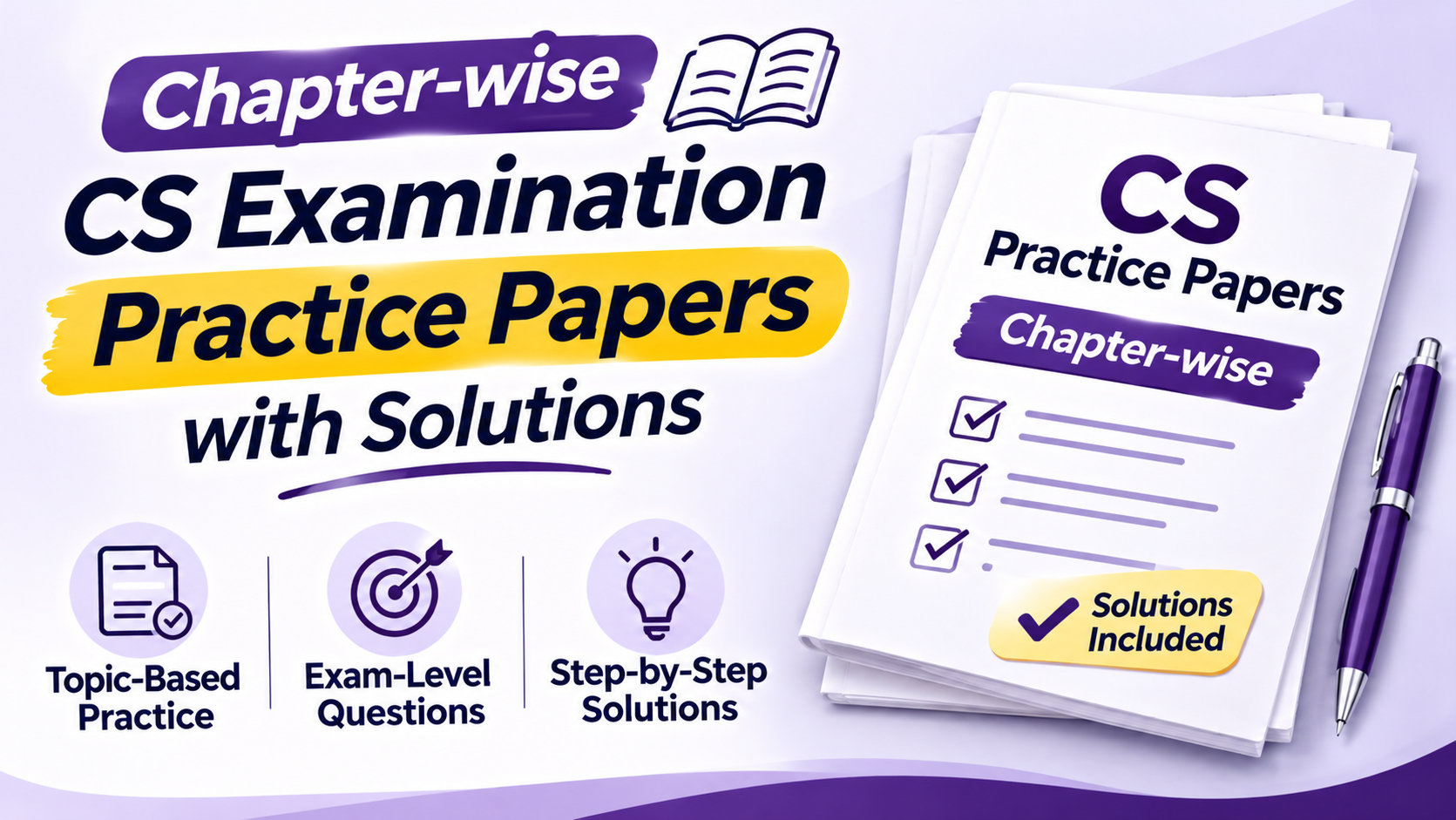
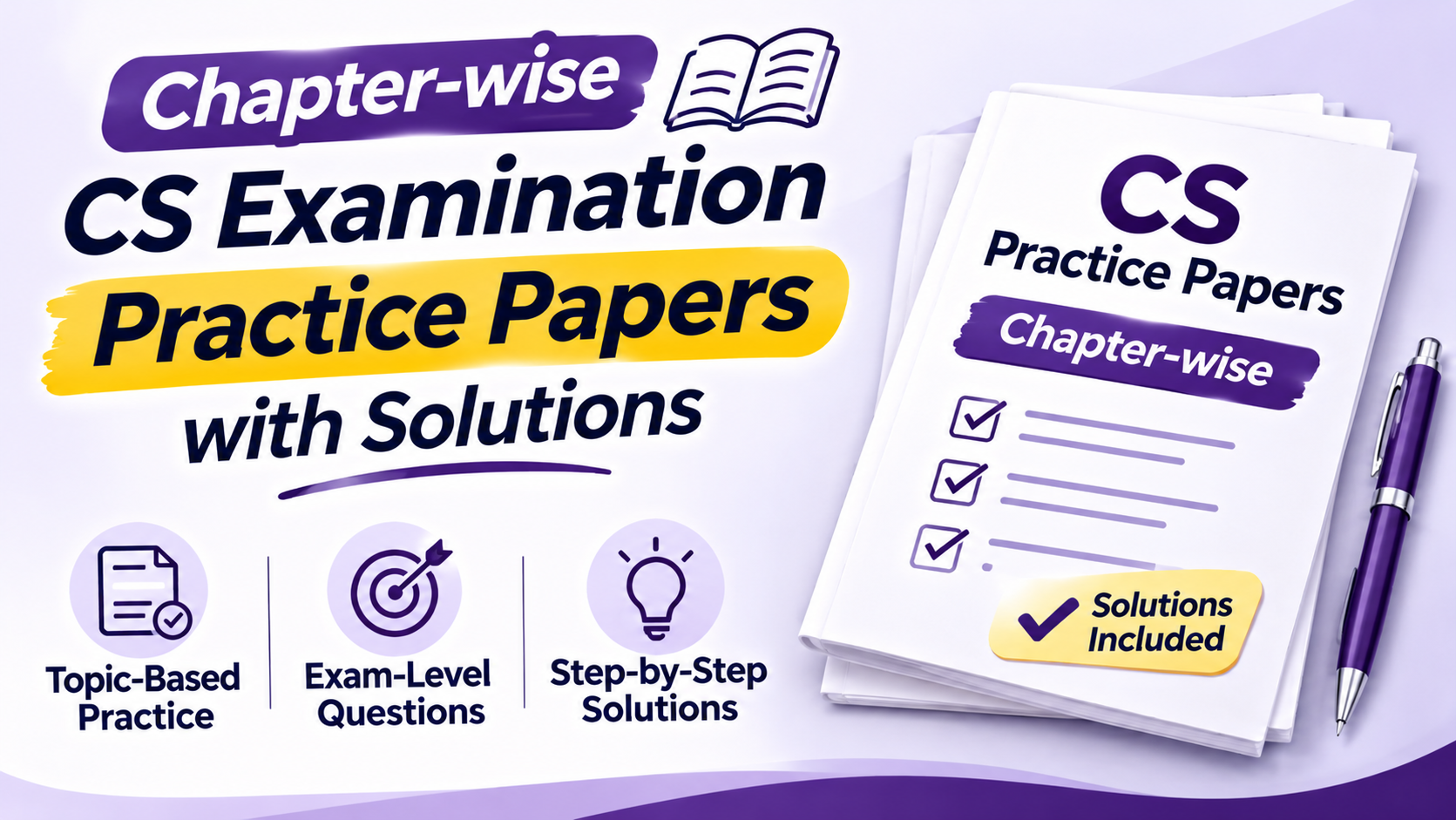
Preparing an entire CS paper at once can feel difficult when several chapters are still being studied. Chapter-wise practice papers make the task manageable by allowing students to test one area at a time and identify gaps while learning is fresh.
Solutions add value when they explain why an answer is appropriate and how it should be presented. Used in sequence, chapter-wise papers build confidence before students move to mixed questions and full-length mock examinations.
What chapter-wise papers are designed to do
Chapter-wise papers focus on a defined topic or unit. They help students check understanding soon after completing a chapter and identify gaps before moving ahead.
They are useful for subjects involving detailed provisions, procedures and application-based questions. A focused test shows whether you remember the rule, understand its conditions and can apply it to facts.
Practise soon after completing a chapter
After studying a chapter, review the key concepts and attempt relevant questions without looking at notes. Early practice reveals what you can recall independently.
If you cannot answer, identify the exact difficulty: forgotten provision, misunderstood exception or weak application. Return to the relevant material and correct the gap before proceeding.
Match papers with the applicable syllabus
Check chapter mapping and relevance to your examination attempt. Old questions may still develop understanding, but provisions, syllabus coverage and examination requirements can change.
Use current official ICSI syllabus and study material as the reference. Verify amendments and older provisions before treating an answer as applicable to your attempt.
Attempt questions before reading solutions
Keep solutions aside until you finish your own attempt. Read the requirement, identify the relevant concept and organise your response. For application questions, connect the facts with the principle.
Compare your answer with the solution afterwards. Look for missing elements, unsupported conclusions, inaccurate references and unnecessary information.
Use solutions to understand the approach
A useful solution explains key points and reasoning. For legal questions, it connects the principle with facts; for descriptive questions, it demonstrates logical organisation and sufficient explanation.
Do not copy every model answer word for word. Learn the essential content and express it clearly in your own language while retaining technical accuracy.
Maintain a chapter-wise performance record
Record the topic, score or self-assessment, errors and next action. Categories such as concept gap, memory gap, application issue and incomplete answer make revision more targeted.
Review the record before the next revision cycle. Retest recurring weak chapters after revisiting the relevant material.
Combine theory and application questions
Practice should include more than direct recall. Include questions asking you to explain, distinguish, analyse or apply a provision to a situation.
For practical or case-based topics, write complete responses rather than only naming a section or principle. Explanation and application are important parts of a developed answer.
Move from chapter tests to mixed practice
After completing several chapters, attempt a mixed paper. Without chapter labels, you must identify the relevant concept independently.
Mixed practice reveals confusion between similar provisions. Add distinctions to revision notes and revisit them before attempting a full paper.
Avoid depending only on important questions
Chapter-wise papers should not become a reason to study only predicted questions. Complete the applicable syllabus and use practice sets to check understanding across its breadth.
Past questions help explain question styles but cannot guarantee future examination questions. Keep preparation aligned with official material.
How CS Exams Test Series fits chapter practice
CS Exams Test Series can complement chapter-wise study with structured testing and review. Select practice that matches your subject and preparation stage, then use results to identify topics needing another round.
Follow a steady cycle: study, attempt, review the solution, correct errors and retest later through mixed practice.
Quick Reference Table
| Stage | Action | Purpose |
|---|---|---|
| After learning | Attempt chapter questions without notes | Check immediate understanding |
| After attempt | Compare with solution | Identify missing points |
| During revision | Retest difficult questions | Check whether errors are corrected |
| Several chapters completed | Attempt mixed questions | Identify concepts independently |
| Before examination | Attempt full papers | Develop timing and writing discipline |
Conclusion
Consistent preparation depends on understanding the syllabus, practising questions and reviewing performance honestly. Keep your study plan aligned with current official ICSI information, and use CS Exams Test Series as one part of a wider routine of learning, revision and examination practice. Focus on correcting weaknesses from one attempt to the next rather than measuring progress only by the number of tests completed.