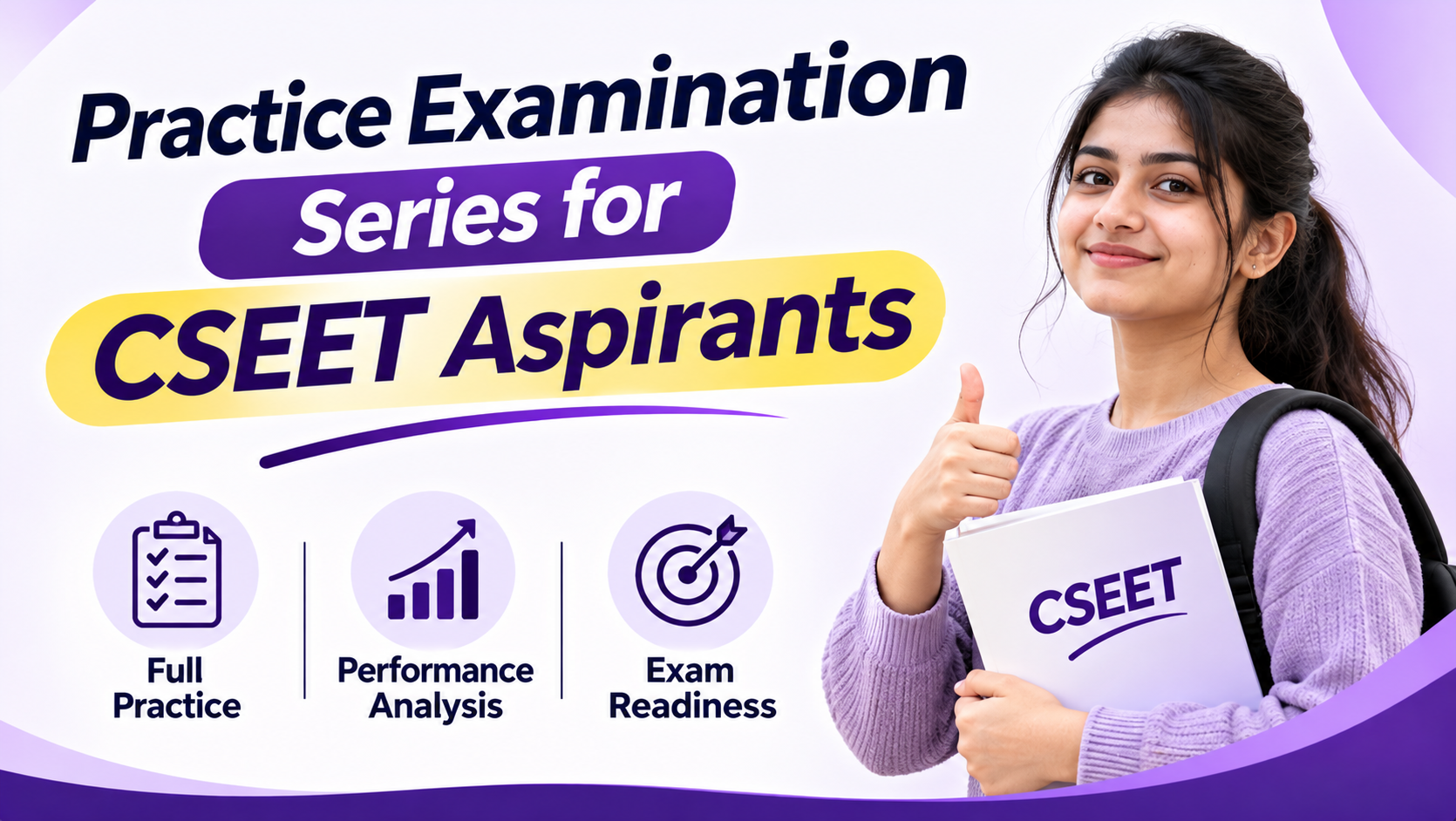
CSEET aspirants prepare across different subject areas while becoming familiar with the question format and time limits. Reading the study material is important, but practice checks whether concepts can be recalled and applied under test conditions. A planned examination series helps students move from topic-level checks to complete mock attempts.
Understand the Examination Requirements
Before planning, confirm the examination structure, syllabus and instructions applicable to your session through official ICSI resources. Divide the syllabus into weekly topics and mark what has been studied, practised and revised. This creates manageable targets and prevents preparation from becoming an unstructured list of chapters.
Why Regular Practice Matters
Regular practice helps aspirants understand question wording and recognise whether a concept is genuinely clear. Short tests can fit into busy schedules and maintain continuity alongside school, college or other commitments. Use questions soon after studying a topic so that misunderstandings are identified early.
Create a Structured Preparation Plan
Begin with topic tests, then attempt mixed tests covering multiple areas. Introduce complete mock examinations as your syllabus coverage increases. This progression helps distinguish a topic-specific weakness from difficulty managing an entire paper and provides time to develop examination habits.
Move From Topic Tests to Full Papers
Read each question fully before selecting or writing an answer. Pay attention to qualifiers, conditions and words that change the meaning. After the test, revisit incorrect or uncertain responses and understand why the correct answer fits. This develops reasoning rather than dependence on memorised answer keys.
Practise Different Question Formats
Follow the time limit and rules applicable to your session. Notice whether you spend too long on a question or rush through the final section. An untimed score does not show how well you can recall information and make decisions within the available examination period.
Build Time Awareness
Record the score, topic-wise performance and questions that caused difficulty. Separate knowledge gaps from errors caused by misreading or rushing. A concept gap may require revisiting the study material, while repeated misreading calls for more careful question analysis.
Analyse Results and Correct Mistakes
Use a weekly routine that combines learning, practice and review. A simple schedule may include new-topic study, topic-wise questions, mixed practice, revision of difficult areas and one timed mock. Keep the plan realistic and adjust it as your preparation develops.
Create a Balanced Weekly Routine
Mock tests can reduce uncertainty about question formats and time limits. Confidence should come from repeated preparation and honest review, not one high score. If a result is lower than expected, identify the cause, revise the relevant material and attempt another test after correction.
Use Feedback to Improve Preparation
CS Exams Test Series can help organise topic practice and mock examinations alongside official ICSI resources. Check that the content and format are relevant to the current CSEET session. Use results to identify revision priorities rather than treating a mock score as a prediction.
Common Mistakes to Avoid
A CSEET practice examination series is most effective when it follows a planned cycle: study, attempt, analyse and revise. Start with topic checks, build towards timed mock examinations and use each result to guide the next study session.