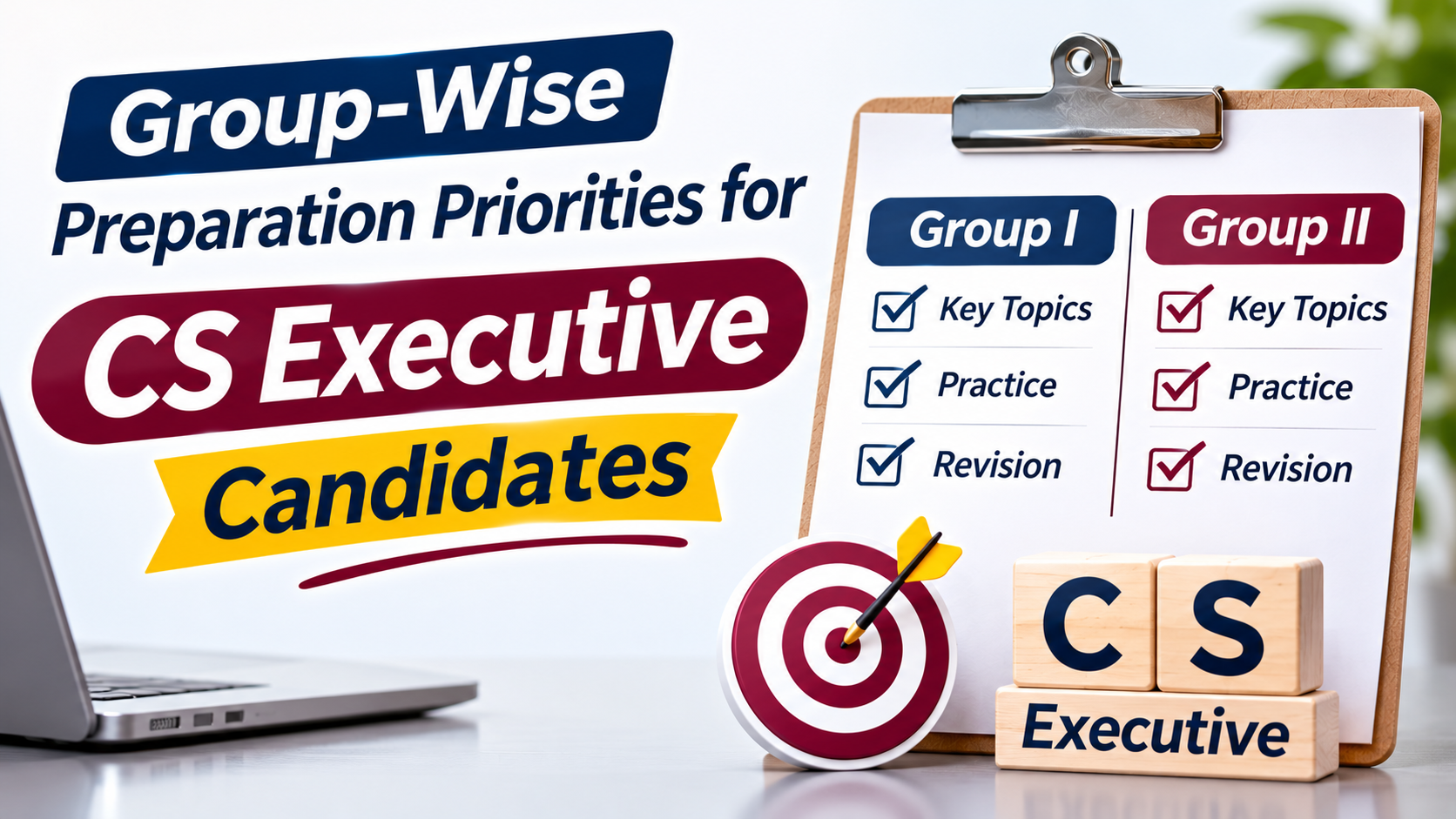
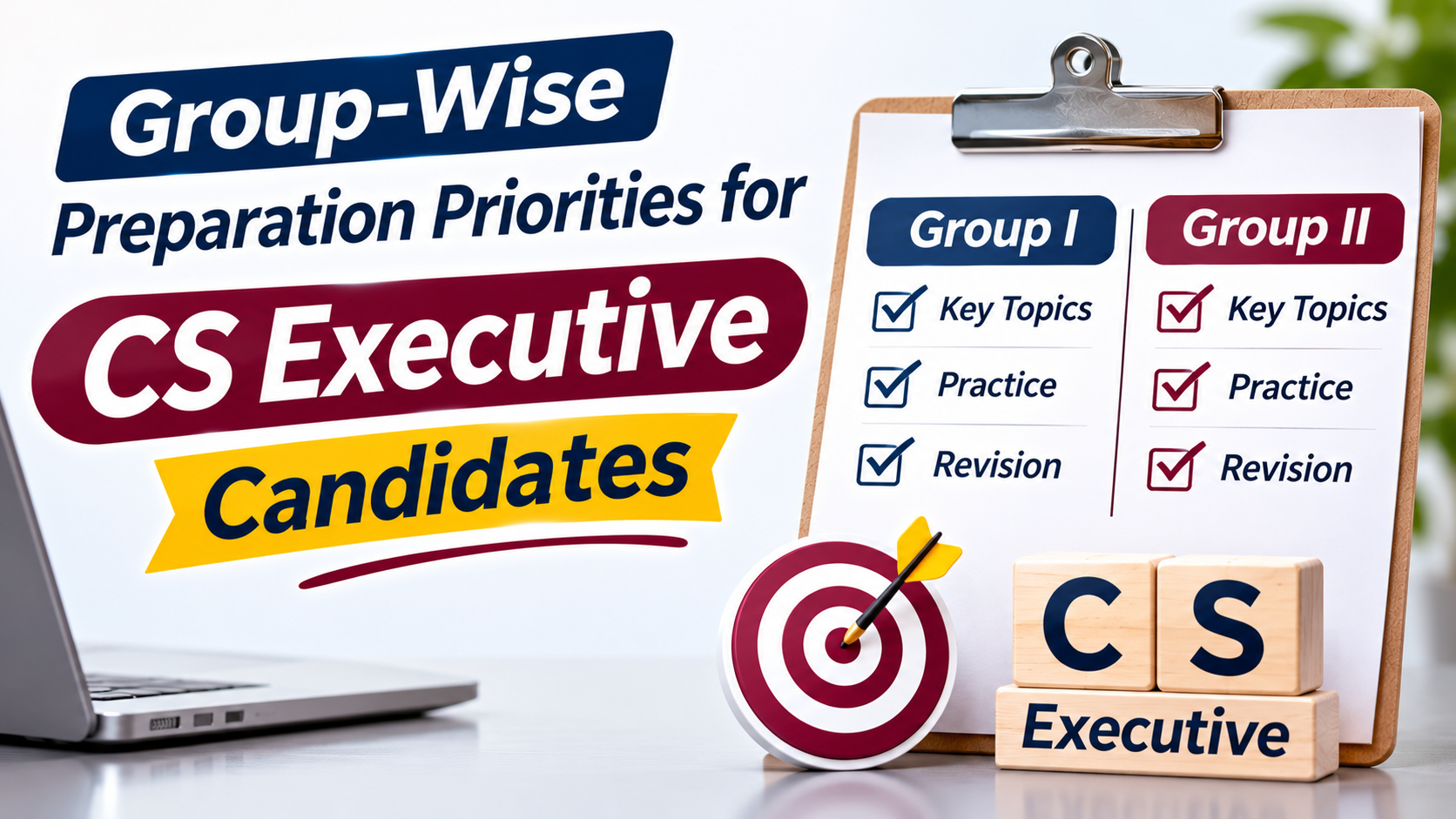
Choosing how to prepare for CS Executive groups is an important planning decision. Some candidates focus on one group at a time, while others prepare for both groups together. The right approach depends on available study time, syllabus progress, confidence in individual papers and the examination schedule.
Rather than following someone else’s strategy without checking your circumstances, assess each paper separately and build a group-wise plan. Keep the current ICSI syllabus and official examination information as your reference.
Understand Your Group and Paper Combination
Confirm the papers and groups you intend to attempt under the applicable CS Executive syllabus. Make a separate checklist for each paper, including chapters, learning status, revision status and question-practice status. This creates a clearer picture than describing an entire group as simply strong or weak.
Note personal constraints that affect the attempt: work or college commitments, time remaining, prior preparation and the number of papers you can realistically cover. Your group decision should be based on readiness and consistency, not pressure from friends or social media.
Decide Whether to Prepare One Group or Both
Preparing one group may allow you to focus deeply on fewer papers and build confidence before moving to the next stage. Preparing both groups can suit candidates who have enough time, a stable routine and meaningful syllabus coverage across all papers. Neither option is automatically best for every candidate.
Compare the workload with the hours you can sustain. If one group is almost ready while the other has major gaps, plan carefully before adding more papers. Use weekly checkpoints to assess whether your progress supports the original decision.
Create a Paper-Level Priority Matrix
Rate each paper by syllabus completion, conceptual confidence, recall, question-solving ability and timed-test performance. A paper that looks familiar after reading may still need practice if you cannot write a complete answer within the time limit. A priority matrix separates these different issues.
Give additional time to papers with significant gaps, but schedule maintenance revision for stronger papers. If exams are close together, consider the order in which papers occur and the time available between them.
Group-Wise Weekly Planning
Plan the week around outcomes for each paper rather than vague targets such as “study Group 1”. A useful outcome might be completing a specific chapter, answering a set of questions and revising an earlier topic. Use a tracker to record what was completed and what needs to move.
Rotate papers across the week so earlier work remains active. If preparing both groups, avoid allowing the group you prefer to consume all available time. If preparing one group, still rotate between its papers and make room for written practice.
Sample Priority Matrix
| Paper status | Evidence to check | Preparation priority |
|---|---|---|
| Low coverage | Many chapters not yet studied | Complete essential syllabus areas and concepts |
| Read but not practised | Few written answers attempted | Add topic-wise question practice |
| Good knowledge, slow answers | Timed tests remain incomplete | Practise pacing and structured answers |
| Repeated recall errors | Same points forgotten in tests | Use spaced revision and active recall |
| Consistent performance | Stable results and clear answers | Maintain with short revision and mixed practice |
Use this sample matrix to decide what kind of work each paper needs. Replace the ratings with your own honest assessment after a topic test or timed answer-writing session.
Balance Conceptual Learning and Answer Writing
Reading the study material is essential, but it is only one part of preparation. For each paper, combine concept review with questions that require you to apply, explain or organise the material. Practise clear headings, relevant provisions or principles where applicable, and direct conclusions.
Do not assume that a strong informal quiz score means you are ready for a written paper. Timed writing reveals whether you can recall information, interpret the question and communicate your answer efficiently.
Use Mock Tests to Compare Readiness Across Papers
Take tests that reflect the syllabus and format relevant to your attempt. Record not only the score but also completion rate, time used, repeated errors and confidence. Comparing these indicators across papers can help you decide where the next study block will have the greatest value.
Do not compare raw scores between papers without considering their differences. The more useful question is whether your own accuracy, coverage and presentation are improving. Review each test and schedule corrections before taking another one.
How CS Exams Test Series Can Support Group Planning
CS Exams Test Series can be incorporated into a group-wise preparation plan as a structured practice and review checkpoint. Choose tests for the papers you are studying and leave time to analyse the result. Avoid booking more tests than you can review properly.
Use feedback to update the priority matrix. If a paper remains weak because of concept gaps, return to learning. If the knowledge is sound but answers are incomplete, practise writing under a time limit.
Common Group-Wise Planning Mistakes
One mistake is treating all papers in a group as equally prepared because they have been read once. Another is ignoring a strong paper for weeks while concentrating on a difficult one. Candidates may also change their group strategy repeatedly without checking how much progress they have made.
Set review dates for your plan and use measurable indicators. If the approach is no longer realistic, adjust it early. Keep your decision grounded in the current syllabus, examination rules and available preparation time.
Final Checklist Before Committing to a Group Strategy
Confirm the current paper combination, review syllabus coverage, estimate remaining study hours and attempt representative questions. Check whether your timetable includes revision, mock tests and correction sessions. If preparing both groups, verify that every paper has a realistic allocation.
Your strategy should help you study consistently and enter the examination with a clear plan. Group selection is only the starting point; regular revision, accurate answer writing and review of mistakes determine how effectively you use the time available.