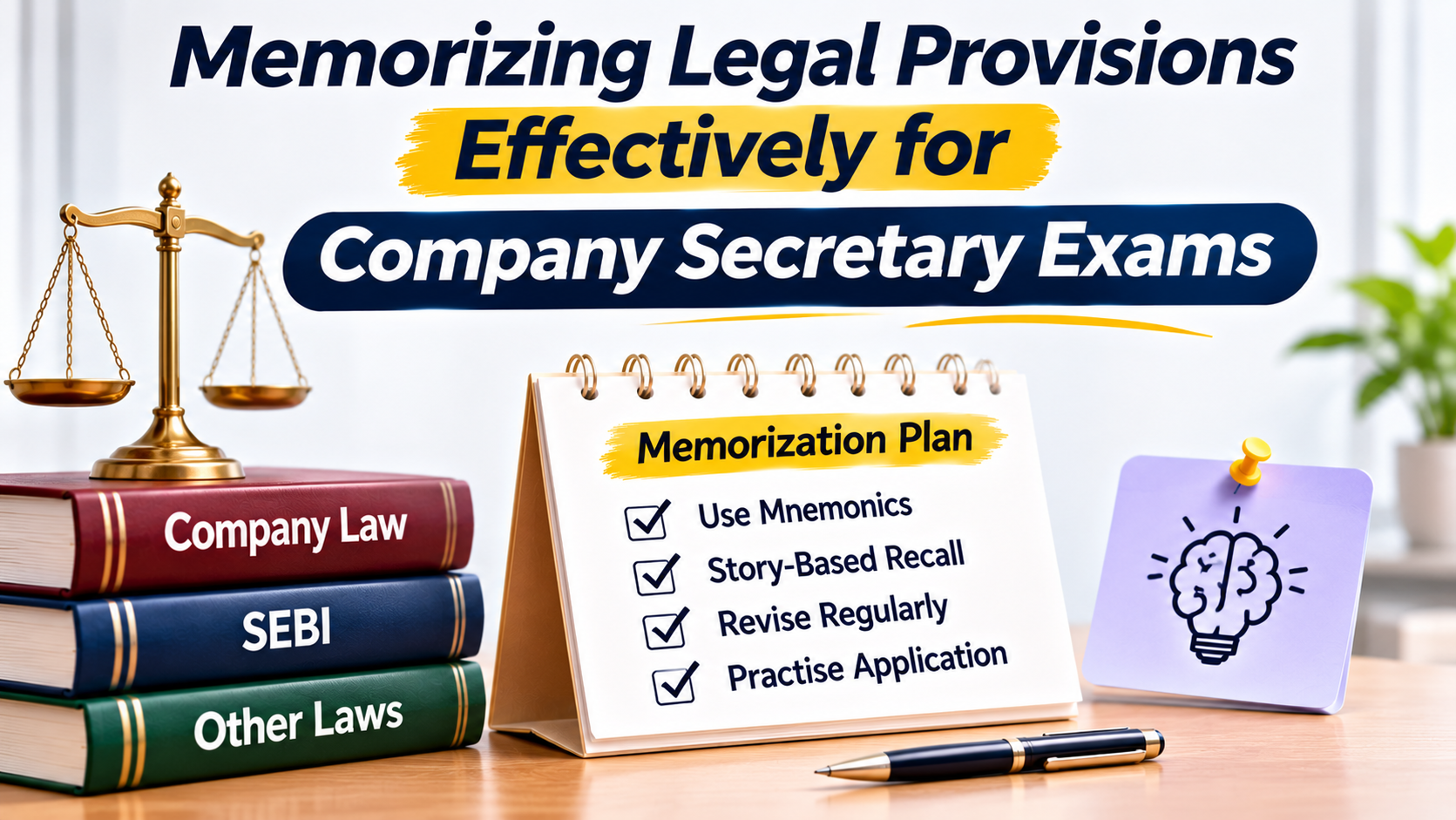
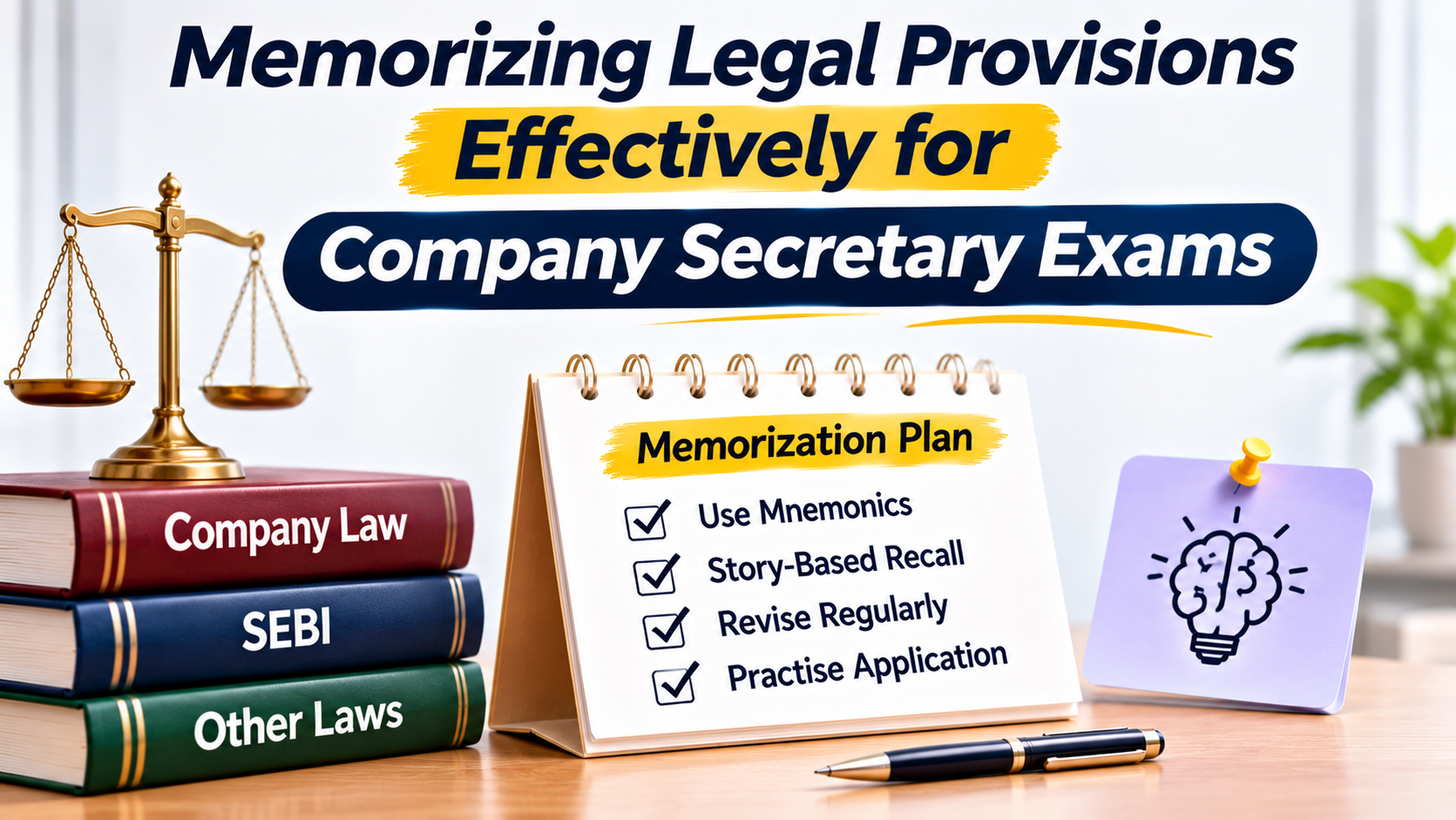
Legal subjects require students to remember provisions accurately while also understanding when and how those provisions apply. Trying to memorise long paragraphs word for word can be exhausting, and the wording may disappear under exam pressure if it has not been revised actively.
A more reliable approach is to understand the structure of a provision, identify its essential elements, recall those elements without notes, and practise applying them to questions. The methods below help make legal revision more manageable without turning every session into rote learning.
Understand the provision before memorising it
Identify what the provision deals with, who it applies to, the conditions involved, and the result or consequence. Understanding the purpose and structure makes details easier to organise. If a sentence is unclear, consult the prescribed material or a trusted explanation before trying to learn it.
Make this step measurable: write the next action in your planner, then check what you can explain or solve without notes. Carry unresolved points into the next review instead of assuming that one reading is enough.
Break long provisions into memory units
Divide a provision into logical parts such as scope, conditions, procedure, time limit, exception, and consequence. Learn the sequence first, then fill in the detail. A short outline is easier to recall than a dense paragraph, particularly when several requirements are connected.
Make this step measurable: write the next action in your planner, then check what you can explain or solve without notes. Carry unresolved points into the next review instead of assuming that one reading is enough.
Identify keywords and trigger phrases
Mark words that change the meaning of a rule, such as conditions, exceptions, permissions, duties, or consequences. Keywords should be memory cues, not a replacement for the full rule. Practise expanding each cue into an accurate explanation.
Make this step measurable: write the next action in your planner, then check what you can explain or solve without notes. Carry unresolved points into the next review instead of assuming that one reading is enough.
Use active recall every day
After studying a provision, close the book and write its main elements from memory. Check the result against the official text and correct omissions. Repeat the recall later rather than reading the provision several times in one sitting.
Make this step measurable: write the next action in your planner, then check what you can explain or solve without notes. Carry unresolved points into the next review instead of assuming that one reading is enough.
Apply spaced repetition
Return to a provision at planned intervals: later the same day, after a short gap, during weekly revision, and through mixed questions. Adjust the intervals according to recall. Difficult provisions need more frequent review, while secure ones can be checked less often.
Make this step measurable: write the next action in your planner, then check what you can explain or solve without notes. Carry unresolved points into the next review instead of assuming that one reading is enough.
Compare similar provisions side by side
When rules are easily confused, prepare a table showing purpose, scope, conditions, exceptions, and consequences. Comparison helps you notice distinctions that may disappear when each provision is studied in isolation. Verify every detail against the applicable source material.
Make this step measurable: write the next action in your planner, then check what you can explain or solve without notes. Carry unresolved points into the next review instead of assuming that one reading is enough.
Practise writing legal answers
Knowing a provision is not the same as explaining it effectively. Practise identifying the issue, stating the relevant principle, applying it to the facts, and giving a reasoned conclusion where required. Use terminology and detail consistent with your prescribed study material.
Make this step measurable: write the next action in your planner, then check what you can explain or solve without notes. Carry unresolved points into the next review instead of assuming that one reading is enough.
Use case-based questions to strengthen recall
A short scenario forces you to decide which provision applies and why. Check whether you selected the correct rule, identified its conditions, and applied the facts accurately. This develops flexible recall rather than memory tied only to the order of your notes.
Make this step measurable: write the next action in your planner, then check what you can explain or solve without notes. Carry unresolved points into the next review instead of assuming that one reading is enough.
Create a compact provision register
Maintain a list of provisions that are difficult to recall or frequently confused. Record the topic, core elements, a short cue, and the next review date. Keep it concise so it remains useful for rapid revision.
Make this step measurable: write the next action in your planner, then check what you can explain or solve without notes. Carry unresolved points into the next review instead of assuming that one reading is enough.
Avoid outdated or inaccurate wording
Use material relevant to your examination session. Legal provisions and rules can change, and copied summaries may omit important qualifications. Confirm the position from the applicable official study material and clearly label amendments in your notes.
Make this step measurable: write the next action in your planner, then check what you can explain or solve without notes. Carry unresolved points into the next review instead of assuming that one reading is enough.
Manage revision across a large syllabus
Do not spend the entire day perfecting a handful of provisions. Use short focused sessions and rotate topics. Review earlier provisions through quick recall while reserving deeper time for difficult rules and answer-writing practice.
Make this step measurable: write the next action in your planner, then check what you can explain or solve without notes. Carry unresolved points into the next review instead of assuming that one reading is enough.
Measure recall with small tests
At the end of a session, test yourself on a few provisions or write a short answer without notes. Later, use mixed questions to see whether you can select the correct provision independently. Track missing elements and recurring confusion, not only pages covered.
Make this step measurable: write the next action in your planner, then check what you can explain or solve without notes. Carry unresolved points into the next review instead of assuming that one reading is enough.
Use CS Exams Test Series to practise under time pressure
Timed tests help you retrieve legal principles under exam conditions and reveal whether answers are incomplete, unclear, or poorly structured. Use feedback to refine your provision register and verify legal details against the material applicable to your attempt.
Make this step measurable: write the next action in your planner, then check what you can explain or solve without notes. Carry unresolved points into the next review instead of assuming that one reading is enough.
Example schedule and tracking table
| Technique | How to use it | What it improves |
|---|---|---|
| Provision mapping | Break rule into scope, conditions, procedure, exception and consequence | Organisation |
| Active recall | Write key elements without looking | Independent retrieval |
| Spaced revision | Return after planned gaps | Longer-term retention |
| Comparison table | Place similar provisions side by side | Distinguishing similar rules |
| Case-based practice | Apply the rule to a fact pattern | Application and answer writing |