A study backlog can build up when classes move faster than expected, difficult topics take longer to understand or personal commitments interrupt the timetable. Seeing a long list of pending chapters can make it tempting to restart the entire plan or study for very long hours. Neither response necessarily solves the problem.
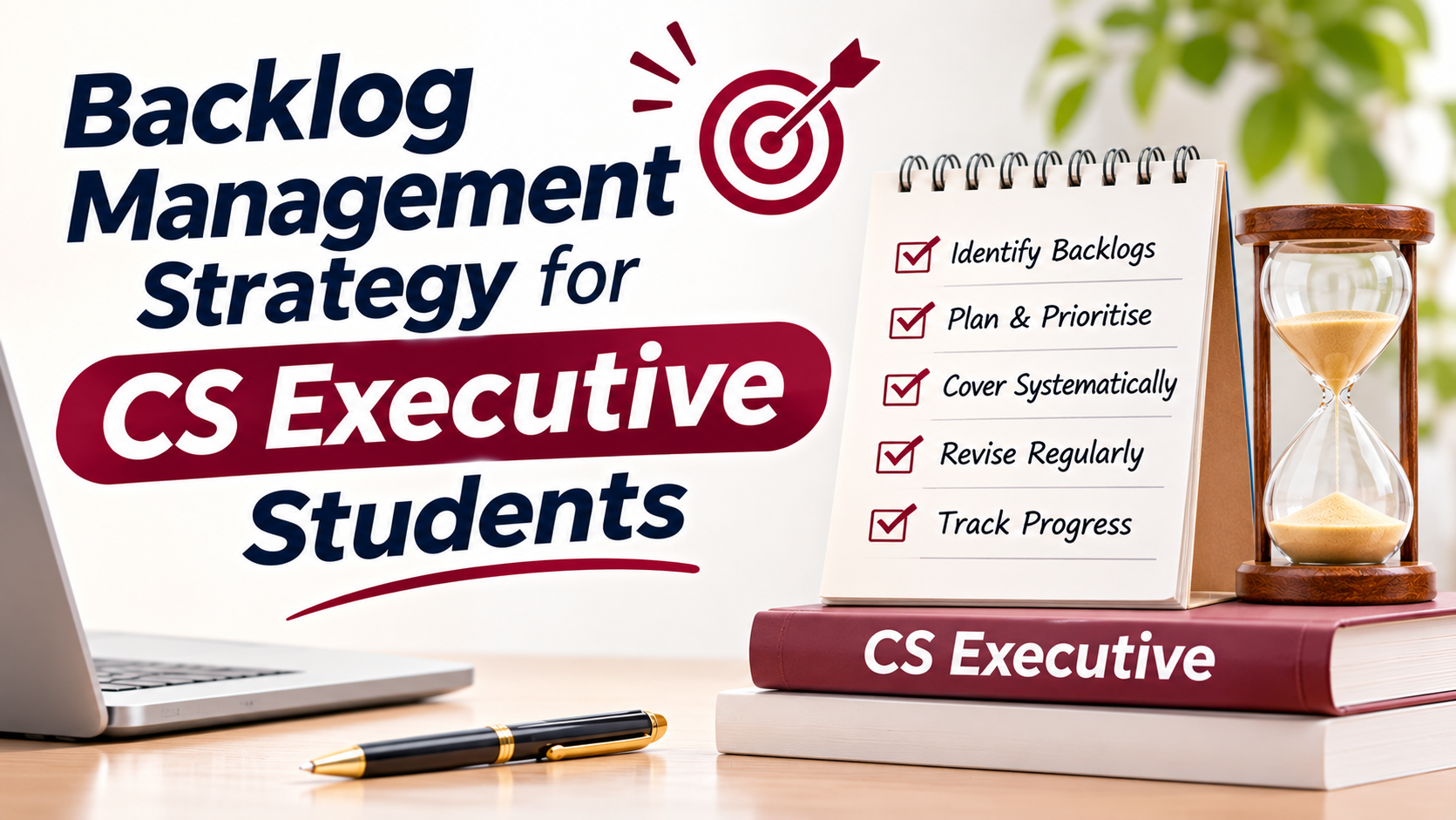
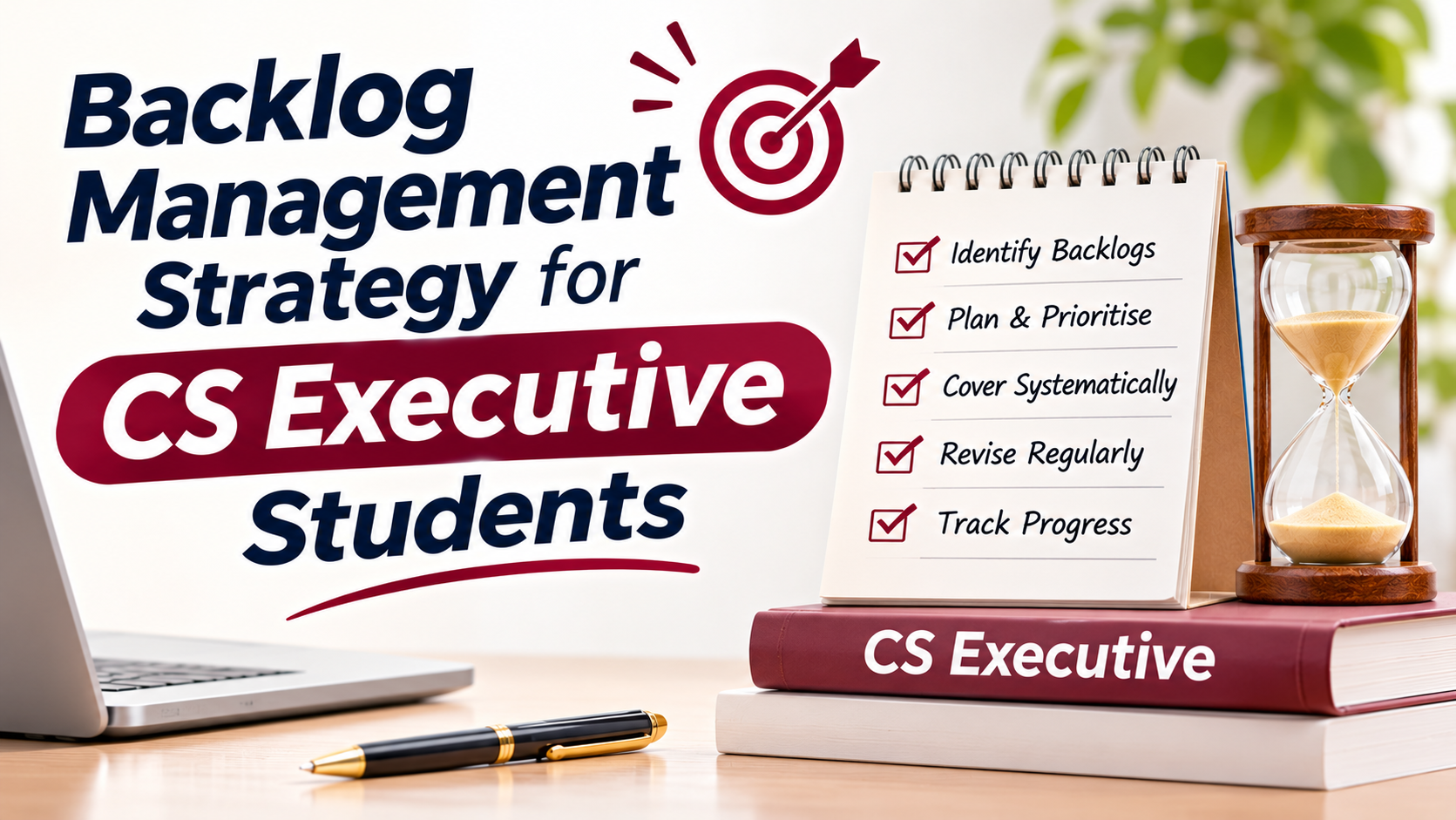
The first step is to measure the backlog, identify what matters most and create a catch-up plan that leaves room for current study and revision. You do not need to finish everything in one weekend; you need a repeatable process that reduces pending work each week.
Measure the Backlog Before Making a Plan
List every pending topic by paper and chapter. For each item, estimate whether it requires a first lesson, concept clarification, question practice or revision. A chapter that has been studied but not practised is different from one that has never been opened, so do not treat every item as identical.
Estimate the time required realistically. Use your past study sessions as a guide rather than assuming each topic can be completed in an ideal one-hour block. The purpose is to understand the size of the backlog and decide what can reasonably be completed.
Separate Urgent, Important and Short Tasks
Prioritise topics that are essential to the current syllabus, support other concepts, or represent major gaps in your understanding. Also consider the time remaining before the examination and your readiness in each paper. Do not prioritise only the easiest chapters just because completing them feels satisfying.
Divide large topics into smaller tasks that can be finished in a session. Instead of writing “complete a subject”, set a target to study a defined section, recall its main points and solve a small set of questions. Smaller tasks make progress easier to measure.
Use a Catch-Up Plan Alongside Current Study
If you focus exclusively on backlog, new classes or planned revision may create another backlog. Reserve a portion of each study week for pending topics while protecting time for current lessons, revision and question practice. Adjust the balance according to the exam timeline and the size of the gap.
Choose a catch-up target that you can maintain for several weeks. It is usually better to finish a few meaningful tasks consistently than to plan an extreme weekend, miss the target and feel forced to rebuild the schedule.
Apply the One-Topic-at-a-Time Method
Choose one defined backlog task and decide what completion means. It may mean understanding a concept, making a short summary, solving representative questions or correcting errors from a previous test. Keep the session focused on that outcome instead of switching between multiple unfinished chapters.
At the end of the session, mark the task status accurately. If you understand the topic but need practice, move it to the question-practice list rather than treating it as completely unfinished. This distinction makes your tracker more accurate.
Sample Weekly Backlog Recovery Plan
| Day | Backlog action | Keep current study moving |
|---|---|---|
| Monday | Complete one small pending concept | Review the latest class topic |
| Tuesday | Practise questions from a pending chapter | Finish the planned current lesson |
| Wednesday | Clarify a difficult concept | Short recall of recent material |
| Thursday | Complete another defined backlog task | Keep up with current coursework |
| Friday | Revise the week’s catch-up topics | Correct mistakes from practice |
| Saturday | Longer catch-up block | Complete one major priority task |
| Sunday | Check tracker and plan next week | Schedule revision and rest |
Use the example below as a starting point. Adjust the number of catch-up sessions to the time you have and the demands of your current classes or work.
Avoid the Perfection Trap
Students sometimes delay moving forward because they want to understand every detail of one chapter before attempting questions. Aim for a sound grasp of core concepts first, then use questions to reveal which details need further work. This prevents one difficult topic from blocking the entire syllabus.
Do not spend hours rewriting notes to make them look complete. Use short summaries, recall questions and representative practice. If a topic remains confusing after a reasonable attempt, note the exact doubt and seek clarification rather than repeatedly reading the same paragraph.
Use a Backlog Tracker That Shows Real Progress
Track each task as not started, in progress, learned, practised or revised. Add an estimated time and a planned session. Review the tracker weekly and move incomplete items deliberately. Avoid marking a chapter complete simply because you watched a lecture or read it once if you cannot answer basic questions.
Include revision in the tracker. Catching up on a chapter but never revisiting it can create a new problem later. Schedule a short follow-up review after completing important topics and use questions to check whether the material is still accessible from memory.
Handle Backlogs During the Final Month
If the examination is close, prioritise the most useful tasks rather than trying to erase every gap at any cost. Protect revision of topics already studied, practise representative questions and focus on essential concepts in areas that remain incomplete. The right balance depends on the current syllabus and your preparation.
Be realistic about what can be completed. A targeted catch-up plan is better than sacrificing all revision and sleep to finish every page. Use your practice performance to decide where the remaining time can have the greatest impact.
Use Tests to Check Whether Catch-Up Worked
After completing a backlog topic, attempt questions without notes. This checks whether you have learned the material well enough to use it. If you cannot answer, identify whether the problem is concept understanding, recall or application and schedule a targeted follow-up session.
CS Exams Test Series can provide a structured checkpoint when you are ready for relevant exam-style questions. Use tests to confirm that the topics you have caught up on are becoming usable knowledge, not simply to measure the size of the backlog.
Prevent the Backlog From Returning
At the end of each week, compare planned work with completed work and identify why tasks were missed. Common causes include unrealistic targets, unclear tasks, distractions or difficulty with a concept. Change the plan to address the cause instead of simply adding more hours.
Keep a small buffer in your schedule and review new lessons soon after studying them. When you miss a session, move the most important task to a specific time rather than carrying the entire list forward. Consistent weekly maintenance can stop a manageable delay from becoming a major backlog.